
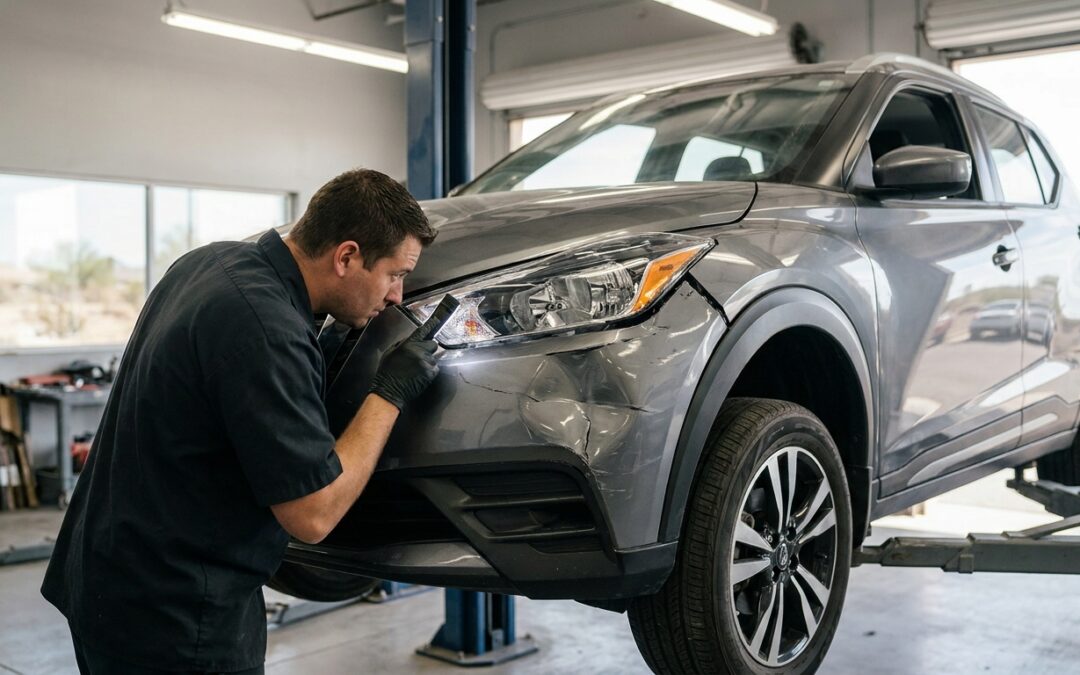
Kia Collision Repair Gilbert AZ: 3 Models We Fix in 2026
Kia has quietly become one of the most common brands in East Valley driveways. The Telluride is a fixture at Higley and Highland youth sports pickup lines, the Sportage and Sorento are everywhere on the 202 during rush hour, and the Forte, Soul, and K5 are the practical daily drivers a lot of Gilbert families rely on. When one of those Kias ends up in a collision, the question isn’t whether a shop can patch a dent — it’s whether they can match the paint, recalibrate the sensors, and hand the car back the way it left the factory. That’s what this guide covers.
Network Collision Repair is a family-owned body shop at 1021 N Gilbert Rd Unit 105, in business since 1995 as part of Network Automotive. We’re an all-makes shop, not a Kia specialist and not a Kia-certified facility — we want to be upfront about that. What we are is a shop that has repaired a lot of Kias for East Valley families and knows the specific things that go wrong with this brand after a crash: the grille-mounted radar sensors on newer Sportage and Sorento trims, the particular way Kia’s metallic paint codes shift under Arizona sun, and the real-world choices that come up when you’re deciding whether to fix a panel or replace it.
Get a Free Estimate for Your Kia
Bring your Telluride, Sportage, Sorento, or any Kia in and we’ll give you a written estimate before anything is scheduled. No pressure, no obligation.
What Makes Kia Collision Repair Different
Kia isn’t a hard brand to work on, but it has its own quirks that matter once a car has been in a wreck. The body panels on recent Kia SUVs use more high-strength steel in the structure than the brand’s older models, which means a hit that looks cosmetic on the surface can still need careful measuring underneath before anyone signs off on “it’s fine.” And because Kia has pushed hard into driver-assist tech across its lineup, even a mid-level trim is likely to have a front radar unit, a windshield-mounted camera, or both — all of which can get knocked out of alignment by an impact that never touches the bumper’s crash structure directly.
Kia Telluride
The Telluride is a big, boxy three-row SUV, which means big flat panels that show every ripple when the light hits them wrong, and a rear liftgate and quarter panel assembly that takes the brunt of a lot of parking-lot and rear-end hits. Telluride owners also tend to have Forward Collision-Avoidance Assist and Blind-Spot View Monitor as standard or near-standard equipment, so a front or rear bumper replacement almost always means a camera or radar recalibration before the car goes back on the road.
Kia Sportage
The current-generation Sportage has a more aggressive, creased body line than its predecessor, and those sharp character lines are genuinely harder to blend paint into after a repair than the smoother panels on an older model. Sportage front clips also carry a lot of sensor real estate behind the grille badge and in the lower bumper — parking sensors, and on higher trims, the radar for adaptive cruise and forward collision warning.
Kia Sorento
Sorento repairs often come down to one decision: repair or replace the quarter panel after a rear-corner hit. The hybrid and plug-in hybrid Sorento trims add another wrinkle, since some of the underbody structure near the rear axle sits close to battery and fuel-system components that need a careful look after any moderate-to-severe impact, even if the exterior damage looks contained.
Forte, Soul, K5, and Niro
Not every Kia collision involves a three-row SUV. The Forte and K5 sedans and the Soul are common daily drivers around Gilbert, and they see the same bumper scuffs, door dings, and fender damage as any other commuter car — just with Kia’s own paint codes and clip hardware. If you drive a Niro hybrid or Niro EV, the one thing worth knowing is that any collision involving the battery pack or the area around it should be inspected with high-voltage safety in mind before a shop starts cutting into panels; we follow standard high-voltage lockout procedure on hybrid and EV platforms and will tell you plainly if a repair needs a specialized facility beyond what we handle in-house.
Common Kia Collision Scenarios We See in Gilbert
A lot of the Kia repairs that come through our doors follow a handful of predictable patterns, and knowing which one you’re dealing with helps set expectations before you even bring the car in.
- Rear-end taps at a light or drive-through. Very common with Soul, Forte, and K5 sedans around busy Gilbert intersections like Val Vista and Baseline. Usually bumper cover damage, sometimes a bent reinforcement bar underneath that isn’t visible until the cover comes off.
- Parking lot door dings and shopping-cart strikes. Telluride and Sorento owners see a lot of this simply because the vehicles are bigger and occupy more of a standard parking stall. Often PDR-eligible if the paint is intact.
- Hail and monsoon debris damage. East Valley storms can leave dozens of small dents across a hood, roof, and trunk lid in a single afternoon. Telluride and Sportage flat panels show this clearly.
- Front-corner impacts from a missed stop sign or merge. This is the scenario most likely to involve hidden sensor damage, since the radar and camera hardware sit right behind the point of impact on most current Kia trims.
- Multi-vehicle freeway incidents on the 202 or 60. These tend to produce the widest range of severity, from a cracked bumper to full structural damage requiring frame measurement.
How Network Collision Repair Handles a Kia
Every Kia that comes through our doors gets measured on our frame system before we write a final repair plan, even for damage that looks purely cosmetic. We paint in-house using a spectrophotometer to read your Kia’s actual, sun-faded color rather than just pulling the factory code off the door jamb sticker — that distinction matters more on metallics like Kia’s Wolf Gray and Mineral Blue than it does on solid colors. For anything involving the front bumper, grille, or windshield, we check what sensors are back there and build the recalibration into the repair plan from the start instead of discovering it’s needed after the car is already reassembled.
We’re not a Kia-certified collision center, and we won’t tell you we are. What we will do is source the correct parts for your specific trim, follow the repair sequence that panel actually calls for, and be honest with you if a repair is outside what we can safely handle in-house — that’s rare, but it happens with specialized EV battery work. For more on how we approach matching factory paint colors and measuring for hidden frame damage, those pages go into more depth on the process.
Already Have a Quote From Another Shop?
Bring it in and we’ll write you a free, honest second opinion so you can compare line items side by side before you commit.
Kia Collision Repair Costs in 2026
Every estimate depends on your specific Kia, the trim, and what’s actually damaged underneath the surface — but here are honest, real-world ranges we see for common Kia repairs in the East Valley.
| Repair Type | Typical Cost Range | Notes |
|---|---|---|
| Paintless dent repair (PDR) | $75 – $500 | Door dings, hail, minor creases with intact paint |
| Bumper repair or replacement | $150 – $1,800 | Varies heavily with sensor content — a Telluride front bumper with radar costs more than a Forte rear bumper with none |
| Panel refinish (door, fender, quarter panel) | $400 – $900 | Per panel, includes blending into adjacent panels for color match |
| Frame or structural repair | $1,200 – $14,000 | Depends on severity; computerized measuring confirms the true scope |
Sensor recalibration, when needed, is typically billed as its own line item separate from the bodywork itself, and a good shop will call it out on your estimate rather than folding it into a vague “parts and labor” number. If your Kia is being repaired through an insurance claim, we write the supplements needed to cover the full, correct scope of repair rather than only what the initial insurer estimate assumed.
A few things push a Kia estimate toward the higher end of these ranges: multiple sensors needing recalibration instead of just one, a trim level with unique badging or two-tone roof paint that complicates color matching, or structural damage that isn’t obvious from the outside but shows up once the car is on our measuring system. We’d rather tell you that up front than discover it halfway through the job and have to call with bad news. On the other end, a lot of parking-lot dings and single-panel scuffs on a Forte or Soul land comfortably in the lower third of these ranges, especially if PDR is an option.
If your Kia is a total-loss candidate rather than a repair candidate — which sometimes happens with older, higher-mileage Fortes and Souls after a serious hit — it’s worth understanding how Arizona insurers calculate that threshold before you agree to anything. Our guide on when a car is considered totaled in Arizona breaks down the math insurers use and what your options are if you disagree with their number.
Why Gilbert Kia Owners Choose an Independent Shop
Network Collision Repair is not on any insurer’s Direct Repair Program, and we’re not going to pretend that’s a downside. Arizona law gives you the right to choose your own repair shop regardless of which shop your insurance company suggests — that’s state statute, not a sales pitch. A DRP shop has agreed to negotiated labor times and pricing with specific insurers, which can create pressure to move fast and keep costs inside a template. An independent shop like ours answers to you, not to a carrier, and that matters more on a newer Kia with sensor-dependent safety systems than it did on cars from a decade ago.
We’ll talk directly to your adjuster, document the repair with photos at every stage, and write supplements for anything the original estimate missed — which, on a modern Kia with hidden sensor hardware, is more common than most drivers expect. If you want more detail on how that claims process actually works, our insurance claim help page walks through it step by step, and if your Kia was part of a larger multi-vehicle crash, our SUV collision repair guide covers the liftgate and quarter-panel realities that apply to the Telluride and Sorento specifically.
↓ Not Sure What Your Kia Needs?
Send us a few photos and we’ll tell you honestly whether you’re looking at PDR, a panel repair, or something more involved — plus a free estimate.
What to Do Right After a Kia Collision
- Take photos before you move the car, if it’s safe to do so — wide shots and close-ups of every damaged area.
- Check your dash for warning lights, especially anything related to lane-keep, forward collision, or the airbag system.
- Don’t assume a “minor” bumper tap is purely cosmetic — ask specifically whether your Kia’s trim has front radar or a camera that could need recalibration.
- You are not required to take your Kia to your insurer’s preferred shop. You can have it brought to us for an estimate and the repair itself.
- Get a written, itemized estimate before any work starts, whether from us or anyone else you’re considering.
Kia Collision Repair FAQ — Gilbert, AZ
Is Network Collision Repair a Kia-certified collision center?
No. We’re an independent, all-makes family shop, not a brand-certified facility for Kia or any other manufacturer. We’re upfront about that. What we offer is experienced collision and paint repair, in-house frame measuring, and honest communication about what a repair actually needs.
Will my Kia’s sensors need recalibration after a bumper repair?
Often, yes. Many current Kia trims — Sportage, Sorento, and Telluride especially — have forward radar, a windshield camera, or parking sensors mounted in or behind the bumper and grille. We check for this on every estimate and build recalibration into the plan rather than discovering it’s needed partway through the repair.
Can I choose Network Collision even if my insurance suggests a different shop?
Yes. Arizona law gives you the right to choose your own repair shop regardless of which shop your insurance company recommends. You are never required to use an insurer’s preferred or Direct Repair Program shop.
Will the paint actually match on my Kia?
We color-match using a spectrophotometer that reads your car’s actual, sun-faded paint rather than guessing from a code on a sticker. That matters especially on Kia’s metallic finishes, which can shift noticeably after a few Arizona summers.
What about my Kia Niro hybrid or EV after a collision?
Any collision involving or near the battery pack on a hybrid or EV Kia gets evaluated with high-voltage safety procedures before any panel work begins. If the damage requires specialized high-voltage battery service beyond standard collision repair, we’ll tell you directly rather than guessing.
How long does a typical Kia collision repair take?
A straightforward bumper or single-panel repair is often a few days. Jobs involving sensor recalibration, parts backorders, or structural measuring take longer. We’ll give you a realistic timeline once we’ve seen the damage in person, not before.
Do you work with my insurance company directly?
Yes. We communicate directly with your adjuster, provide documentation and photos, and write supplements for anything the original estimate missed. You shouldn’t have to manage that back-and-forth yourself.
Do you serve Mesa, Chandler, Queen Creek, and Tempe as well?
Yes. Network Collision Repair is located at 1021 N Gilbert Rd Unit 105, Gilbert, AZ 85234, and serves Kia owners throughout the East Valley.
Let’s Get Your Kia Back on the Road
Whether it’s a scuffed Sportage bumper or a Telluride that needs real structural work, bring it to a family shop that will tell you the truth about what’s needed and fight for the right repair with your insurer.
Or call us directly at (480) 691-2299 · 1021 N Gilbert Rd Unit 105, Gilbert, AZ 85234
Related reading: SUV Collision Repair Gilbert AZ · Car Paint Matching Gilbert AZ · Frame Damage Repair Gilbert AZ · Insurance Claim Help · Post-Repair Inspection · All Services