
SUV Collision Repair Gilbert AZ: 2026 Guide (6 Hidden Risks)
The East Valley drives SUVs and crossovers more than almost anything else on the road — RAV4s, CR-Vs, Explorers, Tahoes, Grand Cherokees, Highlanders, the family hauler that gets the school run, the trailer, and the freeway commute all in the same week. When one of them gets hit, the repair isn’t the same job as fixing a sedan. Bigger body panels, a rear liftgate instead of a trunk, a higher ride height that changes where the impact energy goes, and a dashboard full of cameras and radar sensors tucked into the bumpers and mirrors all change what a shop actually has to do to put your SUV back together correctly. This guide covers what’s different about SUV collision repair, what it should cost in 2026, and what to ask before you let anyone touch your vehicle.
Network Collision Repair is a family-owned body shop at 1021 N Gilbert Rd Unit 105 in Gilbert, under the same ownership as Network Automotive since 1995. We repair every make and model that comes through the East Valley, and SUVs and crossovers make up a large share of what rolls onto our frame rack and into our paint booth every week.
Get a Written Estimate for Your SUV
Bring it in or send photos. We’ll give you a written, line-itemed estimate for the repair, no pressure and no obligation.
6 Things That Make SUV Collision Repair Different
A fender bender on an SUV is rarely as simple as it looks from the parking lot. Here’s what a shop actually has to account for.
1. Bigger Panels, Bigger Color-Match Surface
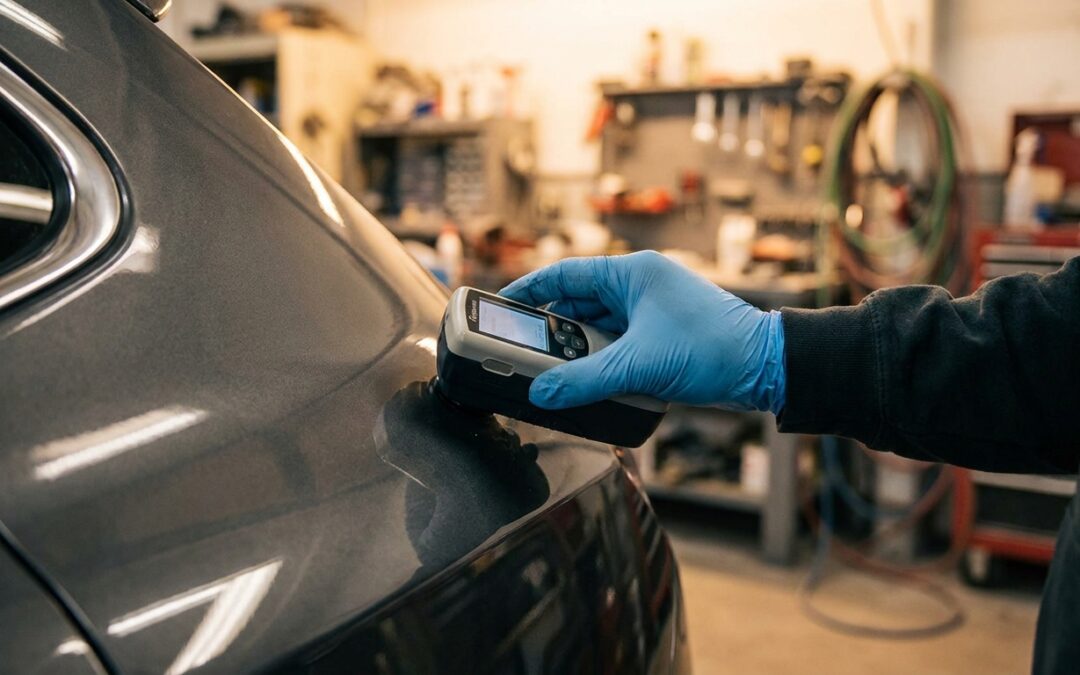
A crossover’s front fender, rear quarter panel, or liftgate is physically larger than the equivalent panel on a compact sedan, which means any blend has to carry across more surface area without a visible seam. On metallic and pearl finishes especially, that takes a spectrophotometer color read and a trained eye on the blend panels, not just a paint code pulled from the door jamb. More on how we handle color matching here.
2. The Liftgate Isn’t Just a Trunk Lid
Most modern SUVs and crossovers run a power liftgate with motors, struts, a backup camera, a wiring harness through the hinge, and sometimes a hands-free kick sensor in the bumper below it. A rear-end hit that would just need a trunk lid and bumper on a sedan can mean re-aligning or replacing the liftgate assembly, re-indexing the power motors, and recalibrating the backup camera on an SUV — and if that camera feeds a 360-degree view system, it has to be aimed correctly or the display will be wrong every time you back up.
3. Quarter Panels Take the Hit in Parking Lots
Because SUVs are taller and wider, rear quarter panels and the taillight housings built into them absorb a disproportionate number of parking lot and reversing collisions. Depending on depth and whether the panel is creased versus just dented, that’s either a paintless dent repair job or a full quarter panel repair and refinish — and the two have very different price tags.
4. ADAS Sensors Hide in the Bumpers and Mirrors
Forward radar behind the front bumper, a camera built into the grille or windshield, blind-spot radar tucked into the rear bumper corners, and cameras built into the side mirrors are all standard on most 2018-and-newer SUVs. A bumper or mirror replacement that doesn’t include recalibrating those sensors can leave your lane-keep, blind-spot warning, or automatic emergency braking reading the road wrong without any dashboard warning telling you so.
5. Ride Height Changes Where the Damage Goes
A higher ride height means a collision that would crumple a sedan’s bumper might instead push energy into the frame rails, the radiator support, or the unibody structure underneath. That’s exactly the kind of damage that doesn’t show from the outside and needs computerized frame measuring to confirm the structure is actually straight, not just that the bumper lines up. Here’s our full breakdown of frame damage and how we check for it.
6. Towing and Roof-Rack Hardware Complicate Rear Damage
Tow hitches, trailer wiring, and roof rack mounting points are common on family SUVs in the East Valley, and a rear-end collision or a tight garage scrape can bend or crack that hardware without it being obvious at a glance. If you tow a trailer or haul a roof box, it’s worth specifically asking your shop to inspect that hardware, not just the sheet metal around it.
SUVs and Crossovers We See Most Often in Gilbert
The East Valley’s SUV mix is broad, and we repair all of it — every make, not just a handful of popular ones. Some of the vehicles that come through our shop most often include:
| Category | Common Models | What Tends to Need Extra Attention |
|---|---|---|
| Compact crossovers | Toyota RAV4, Honda CR-V, Mazda CX-5, Subaru Forester | Front radar/camera recalibration, tight-radius fender repairs |
| Midsize SUVs | Toyota Highlander, Honda Pilot, Ford Explorer, Jeep Grand Cherokee | Third-row structure, larger door and quarter panels, power liftgates |
| Full-size SUVs | Chevy Tahoe/Suburban, Ford Expedition, GMC Yukon | Tow hitch and wiring damage, ladder-frame or body-on-frame checks |
| Luxury and off-road trims | Lexus RX/NX, BMW X-series, Jeep Wrangler/Grand Cherokee trims | Premium paint matching, factory off-road bumper and skid plate hardware |
Whatever you drive, the same question matters: does your shop have the tools to measure the frame, match the paint, and recalibrate the sensors, instead of guessing or subletting that work to someone else?
SUV Repair vs. Sedan Repair: What Actually Changes
We get asked often why an SUV repair estimate can run higher than a friend’s sedan repair for what looks like a similar hit. Here’s the honest comparison.
| Factor | Typical Sedan | Typical SUV / Crossover |
|---|---|---|
| Panel size | Smaller surface, easier to blend | Larger panels, more blend surface and prep time |
| Rear closure | Trunk lid, fewer moving parts | Power liftgate with motors, wiring, and often a camera |
| Impact path | Bumper absorbs most low-speed hits | Higher ride height can push energy into frame rails or unibody |
| Sensor load | Front-facing camera/radar common | Front, rear, and side sensors across bumpers and mirrors are common |
| Towing hardware | Rare | Common, and often damaged without visible signs |
How Network Collision Repairs Your SUV
Whether it’s a Toyota RAV4 with a crumpled front corner, a Jeep Grand Cherokee with frame damage from a highway hit, a Honda CR-V with a dented liftgate, or a Chevy Tahoe that took a parking lot hit to the quarter panel, the process looks the same:
- Computerized frame measuring to confirm the unibody structure is within OEM tolerance before any panel work starts
- Disassembly to assess hidden damage behind the bumper cover, under the liftgate trim, and around the radiator support
- Repair or replace the damaged panel, matched to the manufacturer’s repair procedure for that panel and material
- Spectrophotometer color match and blend into adjacent panels so the repair disappears
- ADAS sensor recalibration for any camera or radar module disturbed by the repair
- Final road test and quality check before the vehicle goes back to you
We also deal directly with your insurance adjuster and write supplements for anything the initial estimate missed — which happens often on SUVs, since a desk estimate written from photos tends to undercount hidden structural and sensor work. More on how we handle the insurance side here.
Already Have an Insurance Estimate?
Bring it in. We’ll walk the vehicle with you and tell you honestly whether the estimate covers what your SUV actually needs.
What SUV Collision Repair Costs in 2026
Every SUV and every impact is different, but here are honest 2026 ranges for the repairs we see most often on crossovers and SUVs in Gilbert, Mesa, Chandler, Tempe, and Queen Creek.
| Repair | Typical 2026 Range | Why the Range Is Wide |
|---|---|---|
| Paintless dent repair (PDR) | $75 – $500 | Depends on dent size, panel location, and whether the paint surface is broken |
| Bumper repair or replacement | $150 – $1,800 | Simple scuff vs. a bumper with sensors, parking assist, or a tow hitch built in |
| Panel refinish (quarter panel, liftgate, fender) | $400 – $900 | Metallic/pearl finishes and large SUV panel surfaces take more prep and blend work |
| Frame or structural straightening | $1,200 – $14,000 | Minor rail pull vs. extensive structural rebuild on a higher-speed impact |
These are repair ranges, not a quote — the only way to know what your specific SUV needs is a written estimate after we’ve actually looked at it.
↓ Want a Written Estimate Before You Decide Anything?
Send us photos or bring the vehicle by. We’ll give you a free, line-itemed estimate you can use to compare against any other shop or any insurance offer.
Why East Valley Families Choose Network Collision for Their SUV
We’ve been a family-owned shop in Gilbert since 1995, under the same ownership as Network Automotive. We’re not on anyone’s Direct Repair Program (DRP) list, and we’re not trying to get on one. That matters more than it sounds like it should.
When your insurer suggests a shop, they’re suggesting one they have a negotiated pricing and turn-time agreement with — not necessarily the shop that will fight hardest for the right repair on your specific SUV. Under Arizona law (ARS §20-469), you have the right to choose any shop you want, regardless of which one your insurance company recommends. As an independent shop, we answer to you, not to a carrier’s preferred-shop agreement, which means we write the estimate for what your SUV actually needs — including the ADAS calibration and structural checks that a desk estimate can miss.
Our customers tend to be the same East Valley families we’ve already repaired a truck, a sedan, and now an SUV for — see our truck collision repair page if you’ve also got a work truck in the family fleet, or our hail damage repair guide if monsoon season is what brought you here instead of a collision.
When a Repair Estimate Isn’t the Whole Story
SUV repair estimates are more likely than sedan estimates to grow once a shop gets the panels off, for one simple reason: more of the damage on a tall vehicle hides behind trim, under bumper covers, and inside a liftgate shell than a desk adjuster can see from photos. A quarter panel that looks like a simple dent-and-paint job from the outside can turn out to have a creased inner structure once the trim is removed, or a taillight housing that’s cracked at a mounting point you can’t see until the bumper comes off.
This is also where total-loss math gets more complicated on SUVs. Because panels are larger and sensor recalibration adds labor that a sedan repair wouldn’t need, an SUV repair bill can climb toward the total-loss threshold faster than the visible damage would suggest. If your insurer starts talking about declaring your SUV a total loss, get a second opinion on the actual repair scope before you agree — we’re happy to walk you through what we’d expect the real number to be.
We’d rather tell you up front that a repair might grow once we’re inside the panel than surprise you with a change order halfway through. That’s also why every supplement we write goes to your insurer with photos and documentation, not just a number.
SUV Collision Repair FAQ — Gilbert, AZ
Does my SUV need ADAS recalibration after a minor bumper repair?
If the bumper has a radar sensor, parking sensors, or a camera mounted near it, yes — even a cosmetic bumper swap can knock those systems out of alignment. We check and recalibrate as part of the repair, not as an optional add-on.
Is my liftgate repaired or replaced after a rear-end hit?
It depends on whether the damage is limited to the outer panel or has reached the frame, motors, or camera mount underneath. We’ll walk you through both options and the cost difference before we start.
Will my SUV’s frame be checked even if the damage looks cosmetic?
Yes, for any impact with real force behind it. Because SUVs sit higher, impact energy that would stay in a sedan’s bumper can travel into the frame rails or unibody structure. We use computerized measuring to confirm, not guess. Read our frame damage repair guide for the full explanation.
Can you match the color on a large SUV panel without a visible seam?
Yes. We read your car’s actual faded paint with a spectrophotometer and blend into the adjacent panels, which is especially important on the larger surfaces common on crossovers and SUVs.
Do I have to use the shop my insurance company recommended?
No. Arizona law gives you the right to choose your own repair shop. We work directly with your adjuster and handle the claim paperwork either way.
What if my SUV tows a trailer or carries a roof rack?
Let us know when you bring it in. We’ll inspect the hitch, trailer wiring, and roof rack mounting points for hidden damage in addition to the visible collision damage.
How long does SUV collision repair usually take?
A bumper or panel repair without structural damage is often a few days. Anything involving frame work, a liftgate assembly replacement, or ADAS recalibration can take longer depending on parts availability. We’ll give you a realistic timeline once we’ve assessed the vehicle.
Do you repair luxury and off-road SUV trims, not just base models?
Yes. We see everything from base-trim crossovers to loaded luxury SUVs and off-road trims come through the shop, and we scope each repair to that specific vehicle’s panels, trim, and sensor package.
Why did my SUV repair estimate go up after the shop started?
Usually because damage behind the bumper cover, inside the liftgate shell, or under quarter panel trim wasn’t visible until the panels came off. We document any supplement with photos and send it to your adjuster directly rather than surprising you with a number.
Could my SUV be declared a total loss instead of repaired?
It’s possible, especially if structural or sensor-heavy damage pushes the repair estimate close to the vehicle’s value. If your insurer raises total loss, get a second opinion on the actual repair scope before agreeing — we can walk you through what we’d expect the real repair cost to be.
Get Your SUV Back on the Road, Done Right
From a parking lot quarter panel dent to a full structural repair, we’ll give you an honest, written estimate and handle the insurance claim with you every step of the way.
Or call us directly at (480) 691-2299 · 1021 N Gilbert Rd Unit 105, Gilbert, AZ 85234
Related reading: Truck Collision Repair · Frame Damage Repair · Hail Damage Repair · Auto Paint Shop · Insurance Claim Help · Door Ding Repair