
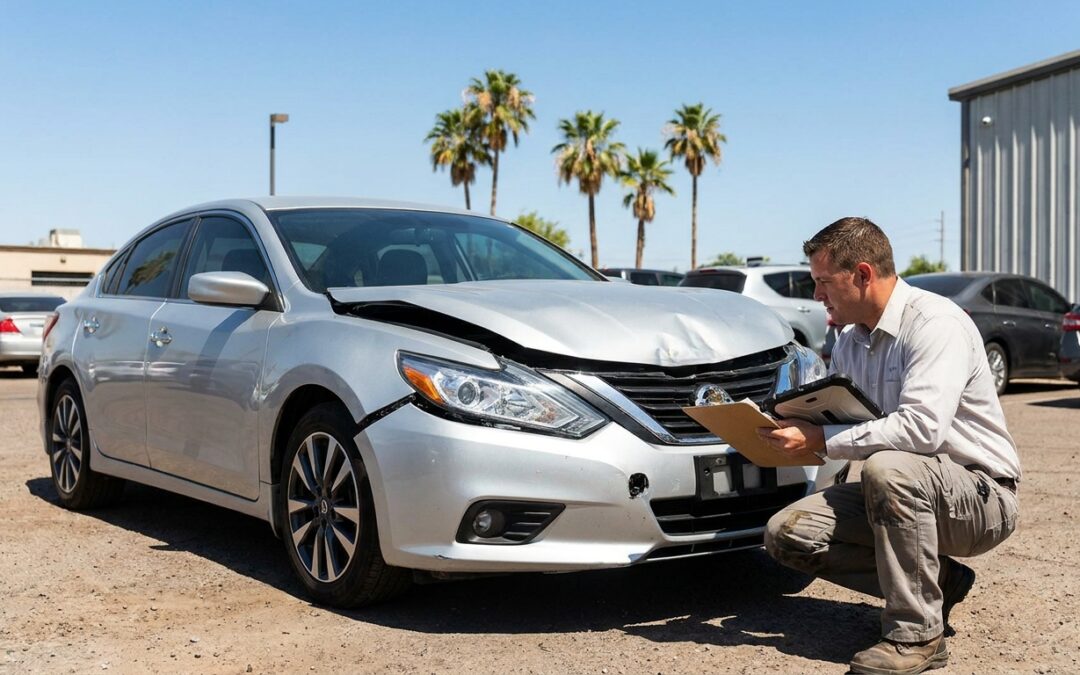
When Is a Car Totaled in Arizona? A 2026 Total Loss Guide for Gilbert Drivers
The letter (or the phone call) usually comes a few days after the tow: “Based on our inspection, your vehicle has been deemed a total loss.” No warning, no vote, and often no clear explanation of the math behind it. If you’re staring at a repair estimate and an insurance offer that don’t seem to add up, this guide walks through exactly how Arizona insurers decide a car is “totaled,” what your actual options are, and where an independent body shop like ours fits into that process — even when we’re not the one doing the repair.
We’re Network Collision Repair, a family-owned body shop on Gilbert Road that’s been writing collision estimates in the East Valley since 1995. Total loss questions come across our counter constantly — usually from someone holding an insurance estimate that feels low, wondering whether to fight it, keep the car, or just take the check. If you haven’t already, it’s worth reading our insurance claim help guide alongside this one — total loss is really just one branch of the broader claims process.
Not Sure If Your Car Should Be Totaled?
Bring us your insurance estimate. We’ll write an independent repair estimate you can use to compare against the insurer’s number — free, no obligation.
What “Totaled” Actually Means
A car isn’t “totaled” because it looks bad or because a fender is crumpled. It’s totaled because of a math comparison: the cost to repair it (plus, in most states, the salvage value) exceeds a percentage of what the car is worth right before the crash — its Actual Cash Value (ACV). Once the repair estimate crosses that line, it’s cheaper for the insurance company to pay you the car’s value and take possession of the wreck than to authorize the repair.
Arizona does not have a fixed statutory total loss percentage written into law the way a handful of other states do. There’s no single number posted anywhere that applies to every insurer. Instead, each carrier sets and applies its own internal Total Loss Formula (TLF) or threshold, typically somewhere in the 70–100% range of ACV, and Arizona law (A.R.S. §28-2091 and related salvage title statutes) mostly governs what happens after that decision — title branding, disclosure, and reconstruction requirements — not the trigger itself.
How the Decision Actually Gets Made
The process is less mysterious once you see the pieces:
1. A repair estimate gets written
Either the insurer’s own appraiser or a body shop (sometimes us) writes an initial estimate based on visible damage. This number is almost always low — it’s based on what’s visible before the car is disassembled.
2. Teardown reveals the real damage
Once a shop actually removes bumpers, liners, and trim to look underneath, hidden damage — bent frame rails, cracked radiator supports, damaged wiring harnesses — often adds thousands in supplements. This is the single biggest reason a car that looked “repairable” at first glance ends up totaled after teardown.
3. The insurer pulls an ACV valuation report
Using tools like CCC One or Mitchell, the insurer generates a valuation based on comparable vehicles for sale in your market — same year, make, model, trim, mileage, and condition. This report, not the number on your loan payoff or what you “feel” the car is worth, becomes the ACV baseline.
4. The math gets run
(Repair cost + estimated salvage value) ÷ ACV. If that ratio crosses the carrier’s threshold, the adjuster is authorized to offer a total loss settlement instead of a repair.
Signs Your Claim May Be Headed Toward Total Loss
- The damage involves the frame, unibody rails, or core support
- The airbags deployed — airbag module and sensor replacement alone can run $1,500–$4,000+
- Your vehicle is older or higher-mileage, keeping its ACV relatively low even before the crash
- The insurer requests a “pre-teardown” supplement inspection before authorizing further repair
- Multiple panels, plus mechanical and structural components, are involved in the same estimate
- Your adjuster starts asking about your vehicle’s condition and options before repair work has even started
Already Have an ACV Offer That Feels Low?
Send us photos or the estimate. We’ll tell you honestly whether repair still makes sense at that number, or where to push back on the insurer’s valuation.
The Repair Costs Behind the Math
To understand why some damage crosses the total loss line and some doesn’t, it helps to see honest 2026 East Valley repair cost ranges side by side. These are the numbers that get added up into that repair estimate:
| Repair Type | Typical 2026 Cost Range | Total-Loss Risk |
|---|---|---|
| Paintless dent repair (PDR) | $75 – $500 | Very low — rarely a factor |
| Bumper repair or replacement | $150 – $1,800 | Low on its own; adds up with other panels |
| Panel refinish / repaint | $400 – $900 per panel | Moderate — multiple panels stack quickly |
| Frame / structural repair | $1,200 – $14,000 | High — the most common reason for total loss |
Notice how the math works: a single bumper and a repaint might land at $1,000–$2,500 on a $15,000 car and stay well under most thresholds. Add frame straightening, an airbag module, and hidden supplement damage found at teardown, and the same $15,000 car can cross 70–75% of its ACV fast — especially if it already had higher mileage before the crash.
How to Push Back on a Low ACV Offer
The first number an insurer sends is rarely their final one — it’s a starting point built from an algorithm, and algorithms miss details a human would catch. If your settlement offer feels low, here’s where to actually look.
Check the comparable vehicles they used
Every ACV report lists the comparable vehicles used to build your valuation. Read them closely. Adjusters sometimes pull comps from outside your local market, with lower trim levels, higher mileage, or missing options your car actually had (leather, sunroof, tow package, upgraded wheels). Each of those differences is a legitimate basis to request an upward adjustment.
Gather your own comps
Pull 3–5 active listings for the same year, make, model, and trim within roughly 50–75 miles of Gilbert, prioritizing similar mileage and condition. Private-party and dealer listings both count, though dealer listings tend to run higher and can help push the average up. Submit these directly to your adjuster with a short written explanation of why they’re more representative than the report’s comps.
Document condition and recent work
New tires, a recent battery, fresh brakes, or documented maintenance records all support a higher valuation. Photos of the car’s interior and exterior condition before the loss (or right after, showing everything except the damage) help counter a lowball “condition adjustment” the insurer might apply.
Ask for the appraisal clause if you’re still stuck
Most Arizona auto policies include an appraisal clause: you and the insurer each hire an independent appraiser, and if those two disagree, a neutral umpire settles the difference. It costs you the price of your own appraiser, but it’s a real lever when negotiation stalls and the dollar amount at stake justifies it.
How Long the Total Loss Process Usually Takes
In the East Valley, a straightforward total loss claim typically runs 2–4 weeks from the date of loss to a final settlement check, though it can stretch longer if there’s a lien on the vehicle, a valuation dispute, or a delay getting the vehicle to an inspection facility. Roughly:
- Days 1–3: Initial estimate written, vehicle towed to a shop or insurer facility
- Days 3–10: Teardown and supplement inspection, total loss determination made
- Days 7–14: ACV valuation report generated and settlement offer sent
- Days 10–21: Negotiation period, if you dispute the offer with your own comps
- Days 14–28: Lienholder paid off, remaining balance sent to you, title transferred if you don’t retain the vehicle
Rental car coverage (if you carry it) typically only pays through the settlement date, not through however long you take to find a replacement vehicle — worth keeping in mind as you decide how hard to push on the valuation.
What Happens After Your Car Is Declared Totaled
You get an ACV settlement offer
The insurer sends a valuation report and a check (or payoff to your lienholder first, if you owe money on the car). You are not required to accept the first number — you can submit your own comparable listings (same year/make/model/trim/mileage/condition, sold or listed near Gilbert) to argue for a higher ACV. Most policies also include an appraisal clause you can invoke if you and the insurer can’t agree.
You can keep the vehicle
In Arizona, you can choose to retain a totaled vehicle instead of surrendering it. The insurer deducts the salvage value from your settlement, and the Arizona MVD issues a salvage title. If you repair it yourself and pass a Level 1 salvage vehicle inspection, it can eventually be reissued as a rebuilt salvage title — but that title brand follows the car permanently and affects resale value and insurability.
If you owe more than the ACV
If your loan balance is higher than the settlement, gap insurance (if you carry it) covers the difference. Without gap coverage, you’re responsible for paying the remaining loan balance out of pocket even though the car is gone.
If the insurer repairs instead of totaling
Sometimes a car stays just under the threshold and gets repaired. If that happens to you, your car’s resale value can still take a hit purely from having a collision on its history — even with a perfect repair. That’s a separate claim called diminished value, and it’s worth understanding on its own; see our diminished value claim guide.
↓ Want a Written Estimate to Compare Against the Insurer’s Number?
Whether your car is borderline for total loss or you just want a second set of eyes on the insurer’s repair estimate, send us the details. We’ll write an honest, itemized estimate you can put next to theirs.
Where Network Collision Fits In — Even on Total Loss Claims
We’re a repair shop, not a salvage title service or a valuation dispute attorney, so let’s be honest about our actual role here. What we do for East Valley drivers navigating a possible total loss:
- Write an independent repair estimate you can compare line-by-line against the insurer’s number, including realistic labor and OEM parts pricing for your specific vehicle
- Flag likely hidden damage before teardown, based on 30 years of seeing what’s usually behind a given bumper or fender after this kind of impact
- Talk directly with your adjuster about scope and supplements if you decide to pursue repair instead of accepting a total loss offer
- Document pre-loss condition with photos and notes if you’re disputing an ACV valuation
- Perform a post-repair inspection if your car was repaired elsewhere and you want a second opinion before you sign off
What we don’t do: process salvage title paperwork with MVD, buy or sell salvage vehicles, or represent you in a formal appraisal-clause dispute. For those, we’ll point you to the right resource — but the repair-side numbers that drive the whole decision are exactly what we do every day.
Why East Valley Drivers Bring Us Their Estimates
Network Collision Repair has been family-owned since 1995, operating under Network Automotive on Gilbert Road. We write line-itemed, honest estimates whether or not the repair ends up happening here — because a driver with an accurate number makes a better decision, and that’s worth more to us long-term than padding a number to look competitive. If you want more on what separates a trustworthy estimate from a rushed one, our what to do after an accident guide covers the steps before you even get to this stage.
Total Loss FAQ — Arizona
Does Arizona have a specific percentage that makes a car totaled?
No. Arizona does not codify a single statewide total loss percentage. Each insurance carrier sets its own internal threshold, typically in the 70–100% range of the vehicle’s Actual Cash Value. Arizona law primarily governs what happens after that decision, like salvage title branding.
What is Actual Cash Value (ACV) and who decides it?
ACV is what your vehicle was worth immediately before the crash, based on comparable vehicles for sale in your market (same year, make, model, trim, mileage, and condition). The insurer generates this via a valuation report, but you can dispute it with your own comparable listings.
Can I keep my car after it’s declared a total loss?
Yes. The insurer deducts the salvage value from your settlement and the vehicle receives a salvage title from Arizona MVD. If you repair it and pass a Level 1 salvage inspection, it can be reissued with a rebuilt salvage title.
Can I dispute my insurer’s total loss valuation?
Yes. Submit your own comparable vehicle listings near Gilbert with matching year/make/model/trim/mileage/condition. Most policies also include an appraisal clause that lets you invoke a formal, independent valuation process if you and the insurer can’t agree.
Does gap insurance matter if my car is totaled?
Yes, significantly. If your loan balance exceeds the ACV settlement, gap insurance covers the difference. Without it, you owe the remaining loan balance yourself even though the insurer has taken the vehicle.
Will a totaled car show up on Carfax or a vehicle history report?
Yes. A salvage or rebuilt salvage title is a permanent brand on the vehicle’s history and typically appears on Carfax, AutoCheck, and similar reports, which affects resale value and future insurability.
What if my car is still drivable but the insurer wants to total it?
Drivability doesn’t factor into the total loss formula — only the cost-to-value math does. A car can run fine and still be declared a total loss if the repair estimate crosses the carrier’s threshold relative to its ACV.
Should I get a second repair estimate before accepting a total loss offer?
Yes, especially if the case is borderline. An independent, itemized estimate can either confirm the insurer’s number or reveal that repair is actually the better financial option — and either way, you make the decision with real numbers instead of a single company’s word.
Get the Real Numbers Before You Decide
Whether your car looks headed for total loss or you just got an ACV offer that feels low, don’t sign anything until you have an independent estimate to compare it against. We’ll give you an honest, written number — free.
Or call us directly at (480) 691-2299 · 1021 N Gilbert Rd Unit 105, Gilbert, AZ 85234
Related reading: Insurance Claim Help · Diminished Value Claim Arizona · What to Do After an Accident · Post-Repair Inspection · All Services