
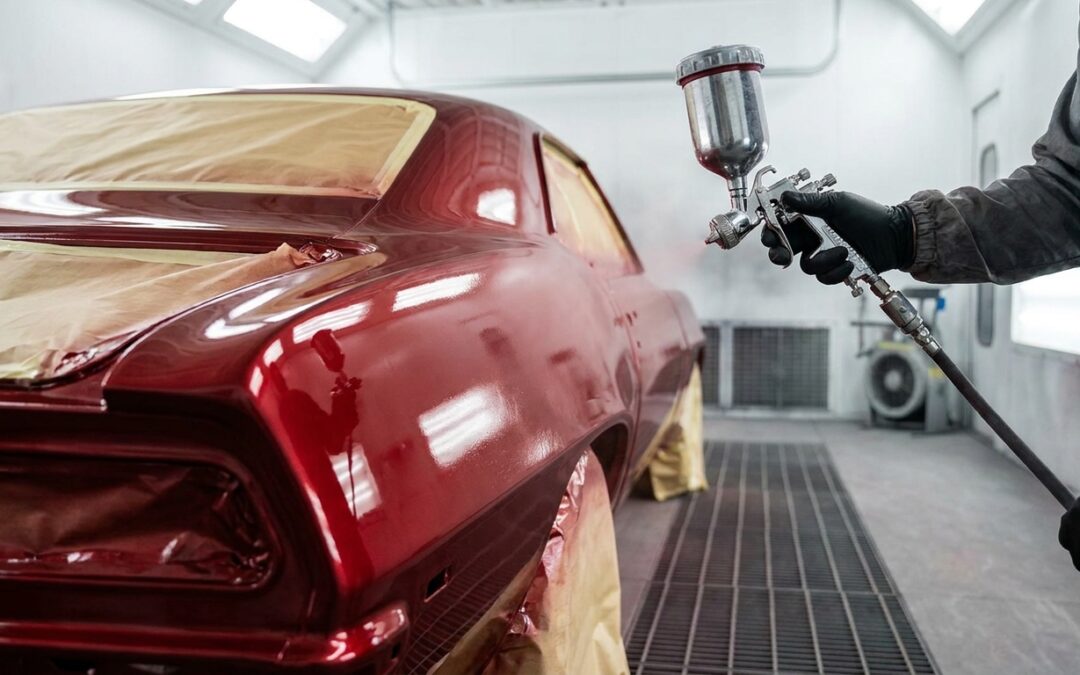
Dodge Collision Repair Gilbert AZ: 2026 Guide [31 Years]
A Charger, Challenger, or Durango is not a car you want handed to whoever is fastest to answer the phone. Wide-body fender flares, factory colors that don’t forgive a bad blend, and a driver’s seating position that makes even a small ding feel personal — Dodge owners tend to notice things a generic shop glosses over. Network Collision Repair has been fixing Dodges for East Valley families since 1995, and this guide walks through what a proper Dodge collision repair actually involves, what it costs in 2026, and what to ask before you drop off your keys.
Network Collision Repair is a family-owned body shop at 1021 N Gilbert Rd in Gilbert, AZ — part of Network Automotive, serving the East Valley for 31 years. We repair every make that rolls through our bay, and Dodge is a regular one in Gilbert, Mesa, Chandler, Tempe, and Queen Creek. This isn’t a certification claim; it’s an all-makes shop that has seen enough Chargers, Challengers, and Durangos to know exactly where they get hit, what tends to hide underneath, and how to match a factory color that most paint mixing systems get wrong on the first try.
Get a Written Estimate for Your Dodge
Bring it in or send photos. We’ll give you a line-itemed written estimate, no pressure.
What Dodge Collision Repair Actually Involves
Dodge’s current lineup splits into two very different repair problems. The Charger and Challenger are low, wide, rear-wheel-drive performance cars built on the aging but still-common LX/LD platform, with factory-flared fenders on Scat Pack and Hellcat-adjacent trims that sit closer to the tire than most sedans. The Durango is a three-row SUV built on a shortened version of the same platform, which means it shares a lot of structural DNA with the sedan and coupe but carries the extra mass, extra glass, and extra sensors of a family hauler.
What both share is a platform that rewards a shop that actually measures instead of eyeballs. Here’s what we’re checking on every Dodge that comes through the door.
1. Wide-Body Fender and Quarter Panel Fitment
Scat Pack widebody and Hellcat-trim Chargers and Challengers use fender flares that are bolted and bonded on, not stamped as one continuous panel with the body. A hit that looks like it only bent the flare can actually be transferring force into the quarter panel or the inner structure behind it. Getting the panel gaps back to factory spec after a widebody repair takes patience — these cars are not forgiving of a flare that sits 2mm proud of the door.
2. SRT-Trim Bumper and Fascia Complexity
Higher-trim Chargers and Challengers carry front fascias packed with brake cooling ducts, splitters, and in some cases functional hood scoops. A front-end hit rarely stops at the bumper cover — it’s common to find a cracked splitter, a bent lower radiator support, or a damaged intercooler behind the fascia that the estimate needs to catch before repairs start, not after the car is half-disassembled.
3. Structural and Frame Measuring
Both the sedan/coupe platform and the Durango’s shortened version of it use a unibody structure with defined crush zones. After any moderate-to-severe hit, we put the vehicle on our electronic measuring system and pull dimensions against factory tolerances. This is the only way to know whether a Charger’s ride height and alignment will actually come back to normal, or whether a Durango’s third-row will still line up correctly, after the repair is buttoned up.
4. Sensor and Camera Recalibration
Newer Chargers, Challengers, and especially Durangos carry forward-facing cameras, radar modules behind the grille or bumper, and blind-spot sensors in the rear quarters. Any bumper or fascia repair on a sensor-equipped Dodge needs a post-repair calibration, not just a reinstall. Skipping this step is one of the most common defects we find during post-repair inspections on cars that were fixed elsewhere.
Common Ways Dodges Get Damaged in the East Valley
Every collision shop sees patterns by make, and Dodge is no exception. Knowing the common scenarios helps set expectations before you even get an estimate.
- Parking lot door dings and shopping cart strikes. Wide doors on the Charger and Challenger, plus a low ride height, mean panel edges take more hits in crowded East Valley shopping center lots. Most of these are candidates for paintless dent repair if the paint isn’t broken.
- Curb strikes on widebody flares. The lower, wider stance that makes a Scat Pack or Hellcat-trim car look aggressive also puts the fender flares and rocker panels closer to curbs, speed bumps, and steep driveway aprons than a standard sedan.
- Rear-end collisions in Valley traffic. Chargers and Durangos both see their share of rear-end hits on Gilbert Road, Val Vista, and the 202/60 corridors, where a look-fine bumper cover can be hiding a bent crash bar or a damaged backup camera housing.
- Monsoon and hail damage. Arizona’s summer storms don’t discriminate by brand. Hail dents on a Durango’s hood and roof, or paint chips on a Charger’s hood from wind-blown debris, are a seasonal reality here.
- Front-end damage from distracted-driver incidents. A hit hard enough to crack the fascia on an SRT-trim car often means checking the intercooler, radiator support, and any adaptive cruise or forward-collision sensor mounted behind the grille.
How Network Collision Repairs Your Dodge
Every Dodge that comes in for collision work goes through the same process, whether it’s a Durango with a cracked bumper from a parking lot bump or a Challenger that needs a full quarter panel after a more serious hit.
- Written estimate first. We inspect the visible damage and note anything we suspect is hidden — bent brackets, cracked ducting, sensor housings — before work starts, so there are no surprise change orders halfway through.
- Electronic measuring for anything structural. If the hit was hard enough to question ride height, alignment, or panel gaps, the vehicle goes on the frame rack before any panel work begins.
- Factory-spec repair procedures. Aluminum and high-strength steel sections get repaired the way the manufacturer specifies, not with a generic shortcut.
- In-house paint matching. Every refinish goes through our spectrophotometer to read your car’s actual, sun-faded color, not just the paint code on the door jamb.
- Calibration before delivery. Any camera, radar, or sensor disturbed during the repair gets recalibrated and verified before you get the keys back.
- Insurance coordination. We’ll talk to your adjuster directly and write supplements for anything the original estimate missed. More on how that process works on our insurance claim help page.
Have a Quote From Another Shop?
Bring it in and we’ll give you an honest second opinion, line item by line item.
Factory Color Matching on Dodge Paint
Dodge is not shy about color. High Octane Red, Sinamon Stick, Destroyer Gray, Plum Crazy, Go Mango, F8 Green — these are some of the hardest colors in the industry to match correctly, and it’s one of the reasons Dodge owners get nervous about body work in the first place. A pearl or metallic like these can shift noticeably with viewing angle and light, and a shop mixing straight off the paint code without reading your car’s actual, sun-faded panel will produce a blend that looks close in the shop and wrong in daylight.
We read your specific panel with a digital spectrophotometer and mix to what your car’s paint has actually faded to after years of Arizona sun, not what it looked like on day one. On multi-stage and pearl colors we blend into adjacent panels rather than trying to hard-edge a color match at a body line, which is where most cheap repaints get caught. More detail on how that process works is on our paint matching page, and our full capabilities are outlined on the auto paint shop page.
2026 Dodge Repair Cost Ranges
Every estimate depends on the actual damage, but here’s a realistic range for common Dodge collision repairs so you know roughly what you’re looking at before you get a number in writing.
| Repair Type | Typical 2026 Range |
|---|---|
| Paintless dent repair (parking lot dings, hail) | $75 – $500 |
| Bumper cover repair or replacement | $150 – $1,800 |
| Single panel refinish (door, fender, quarter) | $400 – $900 |
| Widebody flare repair/replacement (Scat Pack/Hellcat-trim) | $500 – $1,600 |
| Sensor/camera recalibration after bumper repair | Varies by module, quoted with the estimate |
| Frame or structural straightening | $1,200 – $14,000 |
These are honest ranges, not teaser numbers. A quote dramatically below this range for the same scope of work usually means something is being skipped — often the recalibration step or a hidden structural check.
↓ Want a Real Number for Your Dodge?
Send us photos or bring it by. We’ll give you a written, line-itemed estimate you can actually compare against another quote.
Durango Collision Repair: The Family Hauler Angle
The Durango carries its own set of considerations separate from the two-door lineup. It’s heavier, it hauls a third row of kids or gear, and depending on trim it can be equipped with a full suite of driver-assist sensors packed into the front and rear fascias. A rear-end hit on a Durango often means checking the liftgate alignment, the backup camera housing, and the parking sensors embedded in the bumper cover, not just the sheet metal.
Because the Durango shares a shortened version of the same platform underneath the Charger and Challenger, the same electronic measuring standards apply. If your Durango took a hit hard enough to shift ride height or throw off the alignment, we check the full structure before any cosmetic work starts — not after, when it’s harder and more expensive to catch.
If you’re comparing a Durango repair against a work truck or pickup at another shop, our truck collision repair page covers similar structural and towing-related considerations that apply to Dodge’s larger, heavier models.
Timeline: What to Expect From Drop-Off to Pickup
Dodge owners ask about timeline more than almost any other question, and the honest answer is “it depends on what we find once the car is open.” Here’s the realistic shape of a Dodge collision repair from start to finish.
| Stage | What Happens |
|---|---|
| Estimate & teardown | Visual inspection, written estimate, and if needed, a partial teardown to confirm what’s hidden behind the fascia or panel before ordering parts |
| Parts ordering | OEM and quality aftermarket parts sourced; widebody flares and SRT-specific trim pieces can take longer to source than standard panels |
| Structural repair | Frame or unibody straightening on the measuring rack, if the hit was hard enough to warrant it |
| Body work & paint | Panel repair or replacement, spectrophotometer color match, and refinish in our downdraft booth |
| Reassembly & calibration | Trim, sensors, and cameras reinstalled and calibrated; final quality check before delivery |
We’ll give you a realistic window with your written estimate and update you if parts availability or hidden damage changes that timeline. Vague promises about “a couple days” on a car with a widebody flare or a cracked SRT fascia are usually a sign the shop hasn’t actually looked closely yet.
Why Choose Network Collision for Your Dodge
What You’re Actually Getting
- Electronic frame measuring on-site — no subletting structural work to a shop you’ve never seen.
- In-house, climate-controlled downdraft paint booth with spectrophotometer color matching.
- Sensor and camera recalibration handled before delivery, not skipped.
- Lifetime workmanship warranty, in writing, for as long as you own the vehicle.
- Line-itemed written estimates — no vague “we’ll figure it out” scope.
- A family-owned shop that’s answered to the same East Valley customers for 31 years, not a corporate DRP network.
As an independent, non-DRP shop, Network Collision isn’t locked into a network agreement that pressures us toward an insurer’s preferred pricing or timeline. Arizona drivers have the legal right to choose their own repair shop regardless of who their insurance company suggests, and we work directly with your adjuster to make sure the estimate reflects what your Dodge actually needs.
Ready to Get Your Dodge Looked At?
Written estimates, honest timelines, and a shop that’s been doing this since 1995.
Dodge Collision Repair FAQ — Gilbert, AZ
Do you work on Hellcat, Scat Pack, and other high-trim Dodges?
Yes. We repair Chargers and Challengers across the full trim range, including widebody fender flares and the additional cooling ducts and splitters found on higher-performance trims. We’re not a certified Dodge dealer body shop — we’re an experienced independent shop that treats every trim with the same care.
Can you match Dodge’s harder colors like Plum Crazy or Go Mango?
Yes. We use a digital spectrophotometer to read your car’s actual, sun-faded paint rather than mixing blind off the factory code, and we blend multi-stage and pearl colors into adjacent panels for a seamless match. See our paint matching page for more on the process.
My Durango’s bumper sensors stopped working after a repair somewhere else. Can you fix that?
Often, yes. A bumper repair that skipped recalibration is one of the most common issues we find. Bring it in for an inspection and we’ll tell you honestly what’s needed. Our post-repair inspection page explains what that process looks like.
Will my insurance cover the full repair on my Dodge?
In most at-fault collision claims, yes, assuming the damage is covered under the relevant policy. We write a full line-itemed estimate and work directly with your adjuster, including supplements for anything additional we find once the car is opened up. More detail is on our insurance claim help page.
Is Network Collision an insurance-preferred shop for Dodge?
We’re an independent, non-DRP shop, which means we don’t have a network agreement with any specific insurer. Arizona drivers have the right to choose their own body shop regardless of what their insurance company recommends, and being independent means we advocate for the repair your car actually needs.
How long does a typical Dodge collision repair take?
A bumper cover repair or single-panel refinish can often be done in a few days. Structural work, widebody flare replacement, or repairs requiring backordered parts can take longer. We give you a realistic timeline with your written estimate, and we’ll update you if anything changes once the car is disassembled.
Do you repair Dodge Journeys and older Darts too?
Yes — we repair the full Dodge lineup, current and older models, from daily-driver Journeys and Darts to current Charger, Challenger, and Durango models.
Get Your Dodge Fixed Right, the First Time
Widebody flares, hard-to-match factory colors, and sensor-packed fascias aren’t a job for whoever’s cheapest or fastest. Network Collision Repair has been fixing Dodges and every other make in the East Valley since 1995.
Or call us directly at (480) 691-2299 · 1021 N Gilbert Rd Unit 105, Gilbert, AZ 85234
Related reading: Truck Collision Repair Gilbert AZ · Auto Paint Shop · Car Paint Matching Gilbert AZ · Insurance Claim Help · Post-Repair Inspection · All Services