
Airbag Deployment Repair Gilbert AZ: 2026 Guide [6 Costs]
Once an airbag fires, the car is not the same car it was ten minutes earlier. Airbag deployment repair isn’t a bulb swap or a quick reset — it’s a full rebuild of your vehicle’s Supplemental Restraint System (SRS), the hidden network of sensors, explosive inflators, and a dedicated computer that decided, in a few thousandths of a second, to save you. If your airbag light is on after a crash, or a bag actually deployed, here’s what’s really involved in putting that system back to factory-safe, what it tends to cost in 2026, and why this particular kind of damage so often changes the whole conversation with your insurance company.
Network Collision Repair is a family-owned body shop at 1021 N Gilbert Rd in Gilbert, part of Network Automotive and serving the East Valley since 1995. We see deployed airbags constantly, usually riding along with frame or front-end damage from the same frontal or side-impact crash. This guide walks through what actually happens to a vehicle’s safety system in a deployment event and what a correct repair looks like.
Airbag Light On or Bag Deployed? Get a Written Estimate
Bring the vehicle in or send photos. We’ll give you a line-itemed estimate for the SRS repair so you know what you’re actually dealing with before you talk to your adjuster.
What’s Actually Inside Your Car’s Airbag System
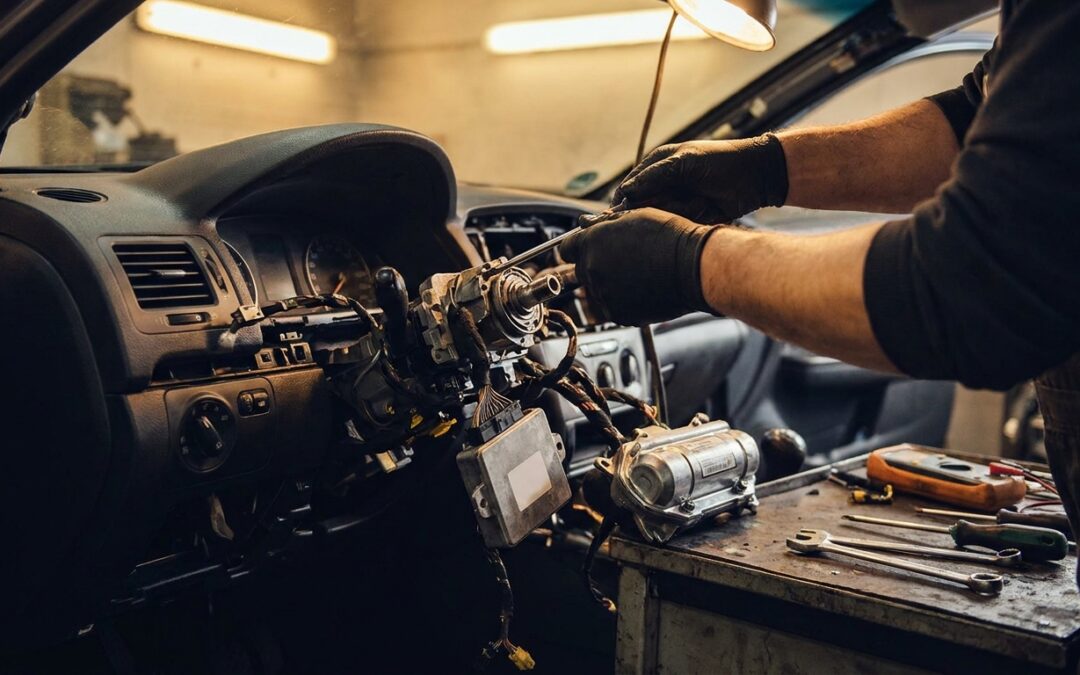
The “airbag” you picture is one small piece of a system that most drivers never think about until it fires. A modern SRS (Supplemental Restraint System) includes several parts working together:
Airbags Themselves
Frontal airbags, side-impact (torso) airbags in the seats, side curtain airbags along the roof rail, knee airbags, and on newer vehicles, center console or seatbelt airbags. Each one is a separate inflator and bag module, and a single crash can trigger several of them at once depending on the angle of impact.
Seatbelt Pretensioners
A split second before (or as) the airbag fires, pyrotechnic pretensioners snap the seatbelt tight against your body to remove slack and hold you in the correct position for the bag to do its job. These are single-use explosive devices, just like the airbags, and they fire separately in the buckle or the retractor.
Crash and Impact Sensors
Multiple sensors mounted in the bumper, radiator support, doors, and B-pillars measure the severity and direction of an impact in real time. They feed that data to one place.
The SRS Control Module
A dedicated computer, usually mounted under the center console or dash, that reads all those sensors and decides which airbags and pretensioners to fire, and in what sequence. After any deployment, this module logs a fault and, on most vehicles built in the last decade, has to be replaced rather than reset once it has recorded a deployment event.
What Actually Triggers a Deployment (and What Doesn’t)
Not every fender bender fires an airbag, and that surprises a lot of drivers. The SRS module is tuned to a severity and deceleration threshold, not just “something hit the car.” A low-speed parking lot tap or a bumper scrape in East Valley traffic usually stays well under that threshold, even when it leaves real cosmetic damage. What tends to cross it:
- Frontal impacts above roughly 10–16 mph into a fixed object or another vehicle, depending on the model’s calibration
- Side impacts to the door or B-pillar, which trigger side and curtain airbags at lower speeds than frontal impacts because there’s so little crush space to absorb the hit
- Rollovers, which trigger curtain airbags and pretensioners on multiple sensors as the vehicle’s orientation sensors detect the roll
- Underride or pole impacts, where the force concentrates on a small area and reads as more severe to the sensors than the visible damage might suggest
This is also why a car can look relatively straight after a crash and still have a deployed airbag, or look badly crumpled in a low, glancing hit and never deploy at all. The visible damage and the SRS module’s read on the impact are two different things, which is exactly why a proper inspection matters more than eyeballing the bumper.
Signs Your Airbags Deployed, Even If You Didn’t See It Happen
Drivers aren’t always looking at the dash in the middle of a crash. If you weren’t sure whether anything fired, look for:
- Fine white or grey dust on the dash, seats, and your clothing — a normal byproduct of the chemical reaction that inflates the bag, not a sign anything is wrong beyond the deployment itself
- A deflated bag hanging from the steering wheel, dash, seat, or headliner
- A popped-open knee bolster panel under the dash on the driver’s or passenger’s side
- A burnt, sulfur-like smell from the inflator reaction
- The seatbelt sitting noticeably tighter or shorter than normal, a sign the pretensioner fired even if the airbag didn’t
- A solid (not flashing) SRS or airbag warning light on the dash that won’t clear
Any one of these means the vehicle needs a full SRS inspection before anyone drives it again, even if the car otherwise seems to run fine.
Why You Can’t Just Clear the Airbag Light
A lit airbag light after a crash means the SRS module has logged a fault, whether or not a bag actually fired. Generic code-reset tools sold for DIY use can clear a stored code, but on most SRS modules a recorded deployment event is written permanently, and the module itself locks or needs replacement. Resetting the light without actually repairing the system leaves you driving a car where the airbags may not deploy correctly, or at all, in the next crash. That’s a safety issue a body shop has to treat as non-negotiable, regardless of what a cheap reset shop advertises.
How Network Collision Handles an Airbag Deployment Repair
Once we’ve assessed which components fired and which sensors triggered, a full SRS repair generally includes:
Replacing Every Deployed Component
Every airbag module that fired, every pretensioner that fired, and typically the impact sensor nearest the point of impact. We source OEM or OEM-equivalent replacement parts and document exactly what’s being replaced for the insurance file.
Replacing or Reprogramming the SRS Module
Depending on the manufacturer, the SRS control module either has to be replaced outright or can be reprogrammed by a dealer-level scan tool after the crash data is read and cleared. Either way, this isn’t optional, and it isn’t a job for a generic code reader.
Steering Wheel and Clockspring Service
If the driver’s airbag deployed, the steering wheel comes off, the clockspring (the coiled ribbon connector that lets the horn and airbag wiring survive the wheel turning) gets inspected and often replaced, and the wheel is reinstalled and torqued to spec.
Dash, Trim, and Seat Reassembly
Dash panels, A-pillar and headliner trim, and seat covers that housed deployed components have to come apart and go back together correctly, which is as much a body-repair skill as a mechanical one.
Post-Repair Scan and Road Test
After reassembly, we scan the full system for stored codes, confirm no SRS warning lights remain, and road test the vehicle before it goes back to you. This is the same discipline we use for structural damage inspections after any significant collision.
How Long Does It Actually Take
Parts availability is usually the long pole, not labor. Airbag modules, pretensioners, and SRS control units often aren’t sitting on a local shelf, so expect a parts order before work even starts. Once parts are in hand, a single-airbag repair with reassembly and testing typically takes a day or two of actual shop time. A multi-point deployment with a steering wheel, multiple curtain bags, pretensioners, and module replacement can run three to five shop days. If the same crash also damaged the frame or front structure, the SRS work usually happens alongside that repair rather than as a separate visit, which is more efficient for both the timeline and your rental coverage.
Already Got a Repair Estimate From Your Insurer?
Bring it in. We’ll compare it line by line against what an actual SRS repair for your vehicle requires. Free second opinion.
Airbag Deployment Repair Costs in 2026 (Honest Ranges)
These are ballpark ranges we see in the East Valley. Your exact cost depends on your vehicle, how many components fired, and parts availability.
| Component | Typical 2026 Cost Range |
|---|---|
| Frontal airbag module (per bag) | $900 – $1,800 |
| Side-impact (seat) airbag | $700 – $1,400 |
| Side curtain / roof rail airbag (per side) | $1,200 – $2,500 |
| Seatbelt pretensioner (per seatbelt) | $250 – $600 |
| SRS control module replacement/reprogramming | $600 – $1,400 |
| Full multi-point SRS repair after deployment | $3,500 – $9,000+ |
Those figures cover SRS parts and labor only. If the deployment happened alongside frontal or side-structural damage, which is common, you’re also looking at body and frame repair costs on top of the SRS work.
What to Do Right After an Airbag Deploys
A few practical steps make the repair and the claim go smoother:
- Don’t drive it further than necessary. A deployed airbag means part of your restraint system is already spent. Get the car towed or trailered to a shop rather than driving it home.
- Photograph the interior before anything is cleaned or disturbed, including the deflated bags, the dash, and the dust, for your claim file.
- Don’t let anyone talk you into a “reset” as a fix. A cleared light with unreplaced components is not a repair, it’s a liability for the next person in that seat.
- Ask for a written SRS line-item estimate before authorizing work, whether from us or anyone else, so you can see exactly what’s being replaced and why.
- Tell your adjuster you want every deployed component documented, not just a generic “airbag replacement” line, so the estimate actually matches what your vehicle needs.
Why Airbag Deployment Often Pushes a Claim Toward Total Loss
This is the part most drivers don’t see coming. Airbag deployment is expensive enough on its own that it meaningfully moves the needle on whether an insurer declares your car a total loss. Add body damage, a likely frame or structural component, and possibly a damaged windshield or sensor-laden bumper, and the repair estimate can climb past your vehicle’s actual cash value fast, especially on older vehicles. We walk owners through exactly how that threshold works in our guide on when a car is totaled in Arizona, including what your options are if you disagree with the insurer’s number.
If your car isn’t totaled, the good news is a correctly performed SRS repair restores full factory function. There’s no reason a well-repaired vehicle with a prior deployment can’t be just as safe going forward, as long as every fired component was actually replaced rather than reset.
Why Choose Network Collision for Airbag and SRS Repair
We’re an independent, non-DRP shop, which matters here specifically: airbag and SRS parts are not a place to cut corners on sourcing, and we answer to you, not to an insurer’s preferred-vendor pricing sheet. Arizona law gives you the right to choose your own repair shop regardless of what your insurance company suggests. We document every deployed component, write the estimate for what your car actually needs, and work directly with your adjuster so you’re not stuck relaying information back and forth. If a lowball estimate doesn’t cover a full SRS repair, we’ll tell you, and we’ll put it in writing.
↓ Want a Written SRS Repair Estimate?
Send us your vehicle info and we’ll put together an estimate covering every component your SRS system actually needs replaced, no guessing.
Airbag Deployment Repair FAQ — Gilbert, AZ
Can I just reset the airbag light instead of repairing the system?
No, not safely. Once an SRS module logs a deployment event, it’s designed to be replaced, not reset. A cleared light with unreplaced components means your airbags may not work correctly in a future crash.
Do all the airbags in my car deploy at once?
No. The SRS module fires only the specific airbags and pretensioners appropriate to the crash’s severity, angle, and location. A side-impact crash may only trigger the side curtain and seat airbag on that side, for example.
Will my insurance cover a full SRS repair?
Comprehensive collision coverage generally covers SRS repair as part of a covered collision claim. We document every replaced component for your adjuster so the claim reflects the actual repair, not a generic estimate.
Why is airbag deployment repair so expensive?
Each deployed airbag and pretensioner is a single-use part that has to be fully replaced, and most SRS modules that record a deployment need replacement or reprogramming too. It’s rarely just one part, it’s a system.
Does a deployed airbag mean my car will be totaled?
Not automatically, but it raises the repair estimate significantly, which can push an older or lower-value vehicle over the total-loss threshold once combined with body damage. See our guide on when a car is totaled in Arizona for how that threshold is calculated.
Can I drive my car with an airbag warning light on after a minor accident?
It’s not safe to assume the system is fine. Have it inspected before relying on the airbags again, even if nothing visibly deployed.
Do you use OEM parts for airbag and SRS repairs?
We source OEM or OEM-equivalent parts for SRS components and document exactly what’s used, since this isn’t a system where aftermarket substitutions are an acceptable shortcut.
What’s the white powder that comes out when an airbag deploys?
It’s a fine dust left over from the chemical reaction that inflates the bag in milliseconds. It’s a normal part of deployment, not a defect, though it does mean a thorough interior cleaning is part of the repair.
My car only has minor cosmetic damage but the airbag light won’t go off. Why?
The SRS module reads sensor and impact data separately from what’s visible on the body. A hit that doesn’t look severe can still register above the module’s deployment or fault threshold, especially a side impact near a B-pillar sensor. The light staying on means the system needs a scan and inspection regardless of how the bumper looks.
Get Your Safety System Back to Right.
If an airbag deployed or the light’s been on since a crash, don’t rely on a quick reset. Bring your vehicle to Network Collision and we’ll tell you exactly what the system needs.
Or call us directly at (480) 691-2299 · 1021 N Gilbert Rd Unit 105, Gilbert, AZ 85234
Related reading: When Is a Car Totaled in Arizona · Frame Damage Repair · Structural Damage Inspection · Insurance Claim Help · Can I Choose My Own Body Shop in Arizona