
Rust After Collision Damage Arizona: 2026 Guide [5 Signs]
Rust is not something most Arizona drivers worry about. We don’t salt our roads, and the desert air is bone dry most of the year — so the assumption is that rust is a Midwest problem, not an East Valley one. That assumption is wrong the moment a collision chips or cracks your paint down to bare metal. Once the factory coating is broken, the clock starts, and Arizona’s own climate — triple-digit summer heat followed by weeks of monsoon humidity — is a surprisingly effective rust accelerant. This guide covers why collision damage turns into corrosion here faster than people expect, the 5 warning signs to catch before it spreads, and what Network Collision Repair does to stop it.
Network Collision Repair is a family-owned body shop at 1021 N Gilbert Rd Unit 105 in Gilbert, serving the East Valley since 1995 under our parent company, Network Automotive. We see this exact scenario play out every monsoon season: a small fender bender from June gets pushed to the bottom of the to-do list, and by September the bumper or quarter panel has a bubble of rust forming under the paint where nobody can see it until it’s already spread.
Spot a Chip, Scratch, or Dent With Exposed Metal?
Send us a photo or bring the car by. We’ll give you a written estimate so you know exactly what it takes to seal it up before rust gets a foothold.
Why Arizona Rusts Faster Than People Think
The “no rust in the desert” idea holds up for a car that’s never had its paint broken. Factory e-coat and clear coat are genuinely good at keeping bare steel sealed away from air and moisture for decades. The problem is what happens the moment that seal is gone.
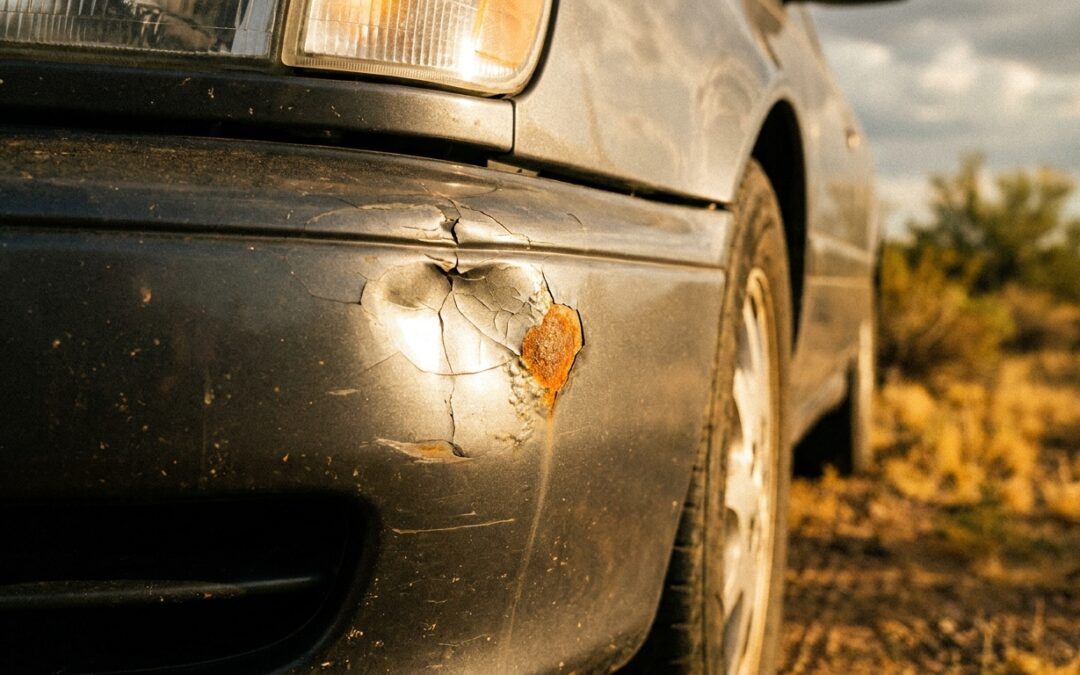
A collision — even a minor one — doesn’t just dent metal. It chips paint at the point of impact, cracks clear coat along stress lines radiating out from a dent, and sometimes exposes raw steel at a torn bumper edge or a deep scratch from a parking lot scrape. Once bare metal is exposed, Arizona’s climate actually works against you in two specific ways:
- Monsoon humidity (July–September). Dew point and humidity spike hard during monsoon season, and that moisture sits in every crack and seam a collision created. Exposed steel plus humidity is exactly the recipe for oxidation, and it doesn’t take standing water — just repeated humid nights.
- Extreme heat cycling. Metal panels in a Gilbert parking lot can swing from 100°F overnight lows to 160°F+ surface temps in direct sun. That constant expansion and contraction stresses any paint that’s already compromised, widening hairline cracks and letting moisture work deeper under the clear coat and primer.
Add dust storm grit, which abrades already-weakened paint edges, and a chip that would sit inert for years in a drier, cooler climate can start bubbling within a single monsoon season here.
The 5 Warning Signs of Rust Starting After a Collision
You don’t need to be a body tech to catch this early. Walk around the vehicle after any contact — a fender bender, a shopping cart, a curb strike — and look for these:
1. A Bubble or Blister in the Paint
This is the single biggest tell. A small raised bubble, even smaller than a dime, means moisture and corrosion are already working underneath the paint film. By the time you can see a bubble, rust has usually been forming for weeks.
2. Rough or Flaking Texture at a Chip or Scratch
Run a finger (carefully) near any exposed-metal chip from the impact. If it feels gritty or you see flaking at the edges instead of a clean break, that’s surface oxidation starting.
3. Orange-Brown Discoloration in a Seam or Crack
Check door seams, wheel well edges, and the underside of bumpers near the impact site. These areas trap moisture longest after a monsoon storm and are usually the first place discoloration shows up before it’s visible on the painted surface.
4. A Scratch That’s Gotten Wider or Deeper
A scratch from a parking lot door ding shouldn’t change over time. If it looks wider, rougher, or deeper a month later than it did the day it happened, corrosion is eating into the edges of the exposed metal.
5. Musty Smell or Moisture Inside a Panel
For deeper collision damage — a dented quarter panel or a bumper that’s been pushed in — check for trapped moisture inside the panel cavity after a storm. A musty smell or visible dampness means water is getting into a space it shouldn’t, and rust forms on the inside of a panel just as readily as the outside, often invisible until it perforates.
Which Collision Damage Rusts Fastest
Not all damage carries equal risk. Some spots are structurally more exposed to moisture and road grit than others:
| Damage Type | Rust Risk | Why |
|---|---|---|
| Rocker panel scrapes | Highest | Lowest point on the car, closest to road spray, moisture, and grit; often the last place drivers check |
| Quarter panel dents | High | Deep creases trap moisture against bare metal where paint has stretched and cracked |
| Bumper cracks/scrapes | Moderate | Plastic itself doesn’t rust, but exposed metal brackets and reinforcement bars underneath do |
| Hood/fender dings | Moderate | Horizontal surfaces catch more sun and heat cycling, but drain better than low panels |
| Door edge dings | Low-Moderate | Vertical surface drains well, but door seams can trap humidity over time |
The First 48 Hours: What to Do Right After a Collision to Keep Rust From Starting
You don’t need special equipment for this. A few simple steps in the days right after a collision buy real time before any corrosion can take hold:
- Rinse the damaged area with plain water. If the impact happened in a dirt lot, on a dusty road, or during a dust storm, grit sitting against exposed metal holds moisture longer than clean metal does once humidity rolls in.
- Dry it off, don’t leave it wet. If you washed the car or got caught in monsoon rain, towel off the damaged area specifically. Water sitting in a crease or crack is the single biggest accelerant.
- Cover a deep chip or gouge temporarily. Clear nail polish or a dab of touch-up paint over a small exposed spot isn’t a permanent fix, but it can slow oxidation for the week or two it takes to get an appointment.
- Don’t park it nose-first facing the sun for weeks. If the damage is on the front end, parking in shade or a garage reduces the heat-cycling stress on the compromised panel while you schedule the repair.
- Photograph the damage the same day. Timestamped photos showing the damage before any corrosion appears matter if your insurer later questions whether rust was pre-existing. More on handling that conversation is on our right-to-choose-your-shop page.
None of this replaces an actual repair. It just buys you a reasonable window to get the car in without racing the clock against a monsoon storm.
Documenting Rust for an Insurance Claim
Because most people don’t associate Arizona with rust, it’s a line item adjusters sometimes push back on if a claim sits open for a while. A few things keep that conversation simple:
File the claim promptly after the collision rather than waiting to see if it “looks bad enough” to bother with. A claim filed the week of the accident, with photos showing exposed metal, makes it straightforward to tie any corrosion that develops back to the collision rather than to general wear. If weeks have already passed and you’re now seeing a bubble or discoloration, that’s still worth documenting and bringing to your adjuster — it doesn’t disqualify the claim, it just means the paper trail matters more.
When we write an estimate that includes rust treatment, we document the bare-metal exposure, the extent of corrosion found once we grind back to clean steel, and the full repair scope (strip, treat, prime, refinish) as a single line item tied to the collision, not as separate “maintenance” work. That distinction is often what determines whether it’s covered without a fight.
Already Seeing a Bubble or Discoloration?
The earlier we catch it, the less metal we have to cut back. Bring it in before another monsoon season passes over it.
How Network Collision Repair Stops Rust After a Collision
Fixing visible dents and matching paint color is only half the job if there’s exposed metal involved. Here’s what prompt, correct repair actually looks like:
Grinding Back to Clean Metal
Any oxidation present has to be fully ground or sanded away before anything else happens. Painting over active rust just traps it under a new layer and it keeps spreading beneath the surface — a shortcut that looks fine for a few months and fails within a year.
Bare Metal Treatment
Once we’re down to clean steel, we apply a self-etching primer or rust-inhibiting treatment designed to bond directly to bare metal and resist future moisture intrusion, especially in low spots like rocker panels and wheel wells.
Proper Primer and Sealer Layers
A full primer-sealer system, not a quick spray-and-go, gives the panel the same corrosion protection the factory e-coat provided before the collision compromised it.
Color-Matched Refinish
We finish with a spectrophotometer-matched color coat so the repaired panel blends with the rest of the vehicle, even on Arizona-sun-faded paint. More on how that process works is on our paint matching page.
Checking for Hidden Damage
On anything beyond a surface scratch, we check behind the panel for damage that can trap moisture out of sight — the same hidden-damage logic we cover on our structural inspection page. A panel that looks fine from the outside can still be rusting from the inside if there’s a gap or crease behind it holding water.
What Rust Repair Typically Costs
Cost depends entirely on how much corrosion has spread and whether it’s surface-level or has eaten into structural metal. Honest 2026 East Valley ranges, assuming it’s caught reasonably early:
| Scope | Typical Range |
|---|---|
| Small surface chip, caught early (grind, treat, touch-up paint) | $150 – $400 |
| Scratch or scrape with surface oxidation, panel refinish | $400 – $900 |
| Bumper with cracked paint and bracket corrosion | $150 – $1,800 |
| Rocker or quarter panel with spreading bubble/corrosion | $400 – $1,800 |
| Rust that’s reached structural metal | $1,200 – $14,000 |
That bottom row is the entire point of catching this early: a $300 repair ignored for two or three monsoon seasons can become a multi-thousand-dollar structural repair. Rust doesn’t stay contained to where the impact happened — it spreads outward under the paint in every direction.
When to Get It Looked At Right Away
- Any collision damage that exposed bare metal, even a small chip
- A dent or scrape that hasn’t been repaired going into monsoon season (July–September)
- Any bubble, blister, or flaking paint near old collision damage
- Discoloration in a seam, wheel well, or rocker panel
- A repair from another shop where you’re not sure bare metal was properly treated
Why Choose Network Collision Repair
We’re an independent, family-owned shop, not a franchise and not tied to any insurer’s preferred-shop network. That matters here specifically because rust repair done right takes an extra step — proper grinding, bare-metal treatment, and sealer — that a shop rushing to hit an insurer’s labor-time template might skip. We take the time because we’re answering to you, not a claims department.
As Arizona drivers, you have the legal right to choose your own shop for a collision repair claim, regardless of which shop your insurance company suggests first.
↓ Not Sure If That Chip Is Already Rusting?
Send us a photo and we’ll tell you honestly whether it’s still just surface-level or whether it needs attention now. No obligation.
Rust After Collision Damage FAQ — Gilbert, AZ
Does Arizona really have a rust problem with cars?
Not on intact paint — the dry climate is genuinely protective there. The problem is specifically bare metal exposed by collision damage, where monsoon humidity (July–September) and extreme heat cycling accelerate oxidation faster than most drivers expect.
How fast can rust actually spread after a collision in Gilbert?
Visible oxidation can start showing on exposed bare metal within two to three weeks during monsoon season, and it spreads outward under the paint from there, well beyond the original point of impact.
Will my insurance cover rust repair after a collision?
If the corrosion is a direct result of collision damage and you file the claim promptly, it’s typically covered as part of the collision repair. The longer repair is delayed, the more an insurer may try to characterize some of the corrosion as pre-existing wear rather than collision-related, so prompt documentation matters.
Can I just touch up a paint chip myself to stop rust?
A quick touch-up pen can buy you a little time, but it rarely seals the edges completely, especially over a textured chip or crack from an impact. If rust has already started underneath, touch-up paint just hides it rather than stopping it. Have it checked by a shop before assuming it’s handled.
What’s the difference between surface rust and structural rust?
Surface rust sits in the paint and primer layer and is straightforward to grind back and treat. Structural rust has worked into load-bearing metal — frame rails, rocker panels, structural supports — and can affect the safety and integrity of the vehicle, which is a much more involved repair.
Is a car with rust after collision damage worth fixing?
In almost every case, yes, especially if caught at the surface stage. The cost to properly grind, treat, and refinish a small area is a fraction of what it costs to let it spread into structural metal over a few seasons.
Do you serve areas outside Gilbert for this kind of repair?
Yes. Network Collision Repair is located at 1021 N Gilbert Rd Unit 105, Gilbert, AZ 85234, and we serve drivers throughout the East Valley including Mesa, Chandler, Tempe, and Queen Creek.
Catch It Before the Next Monsoon Season
If a collision chipped, scratched, or dented your car and you’ve been putting off the repair, Arizona’s heat and humidity swings aren’t doing you any favors. Bring it in and we’ll tell you straight whether it’s a quick fix or something that needs attention now.
Or call us directly at (480) 691-2299 · 1021 N Gilbert Rd Unit 105, Gilbert, AZ 85234
Related reading: Hail Damage Repair · Car Paint Matching · Quarter Panel Repair · Door Ding Repair · Structural Damage Inspection · Can I Choose My Own Body Shop