
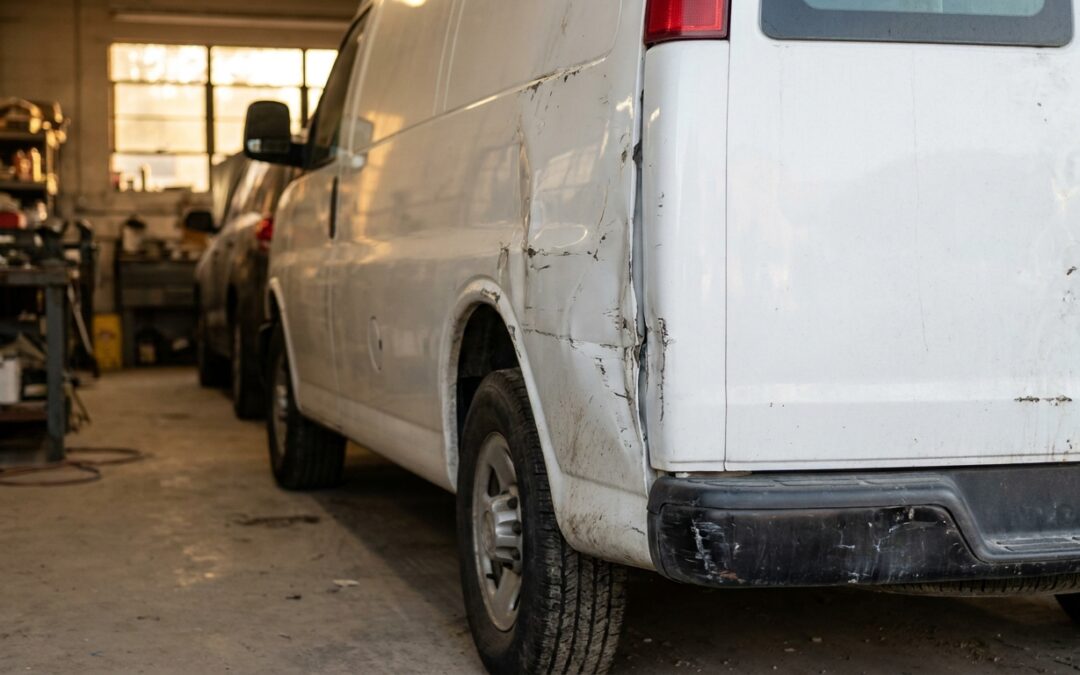
Fleet Collision Repair Gilbert AZ: 2026 Guide [3-Day Avg]
When a work truck or service van is down, it isn’t just a vehicle sitting in a shop — it’s a technician who can’t get to a job, a delivery that doesn’t go out, or a crew standing around with nothing to drive. Fleet collision repair is a different problem than repairing one personal car, because the real cost isn’t the repair bill. It’s every day the vehicle isn’t earning. This guide is for East Valley small-business owners and fleet managers who need a wrecked or dinged work vehicle fixed right and back on the road fast.
Network Collision Repair is a family-owned body shop at 1021 N Gilbert Rd Unit 105 in Gilbert, serving East Valley contractors, delivery operations, and service businesses since 1995. We already work on plenty of work trucks, including Ram and GMC trucks and vans that carry ladder racks, wraps, and decals — and we understand that a fleet vehicle has to go back into service looking right and running right, not just technically “repaired.”
Running More Than One Work Vehicle?
Tell us what happened and how many vehicles are involved. We’ll give you a written estimate and a realistic timeline before you commit.
Why Fleet Collision Repair Is a Different Problem
A personal vehicle owner can usually absorb a week or two without their car by carpooling or renting something cheap. A business usually can’t absorb a week or two without a revenue-generating vehicle — not without feeling it on the books. Fleet collision repair has to account for that reality from the first phone call, not as an afterthought once the vehicle is already up on the rack.
That changes what matters most in a repair partner. It’s not just “can you fix it correctly,” it’s “can you fix it correctly without letting the schedule drift,” and “can you work with whoever is actually paying for it — your insurer, the other driver’s insurer, or your own maintenance budget — without making my office chase paperwork for three weeks.”
1. Priority Scheduling
When a fleet vehicle comes in, we try to get it torn down and on a written estimate fast so parts ordering starts immediately instead of sitting in a queue behind lower-urgency jobs. The goal is to compress the time between “vehicle arrives” and “parts are on order,” because that gap is usually where days get lost on any collision repair, fleet or not. For a single vehicle, a day or two of delay is an inconvenience. For a business running three trucks on tight routes, that same delay can mean rescheduling every customer those trucks were supposed to see that week.
We also try to flag early whether a repair is going to be a short in-and-out job or a longer structural one, so you can make staffing and scheduling decisions around real information instead of waiting on us to figure it out.
2. Honest Downtime Estimates, Not Guesses
“A few days” isn’t good enough when you’re planning a crew schedule around it. We give you a real range based on what we actually find once the vehicle is apart. Cosmetic panel damage with no structural involvement moves differently than anything that touches the frame, suspension mounting points, or safety systems — and we’ll tell you which situation you’re in as soon as we know, along with realistic parts lead times, since some OEM parts for work trucks and vans can take longer to arrive than aftermarket panels.
If the timeline changes mid-repair — say, hidden damage shows up once a bumper comes off — we’ll call and explain it rather than let you find out when you ask for a pickup date and get silence.
3. Protecting Wraps, Decals, and Branding
If your work vehicle has a vinyl wrap, lettering, or decals, those have to be removed carefully during disassembly and either reapplied or coordinated with your sign vendor before the vehicle goes back out looking like it belongs to your business. A rushed removal can tear or stretch vinyl that then has to be replaced entirely, adding cost and time that has nothing to do with the collision itself. We factor wrap and lettering handling into the repair plan up front rather than discovering it as a surprise on delivery day.
What to Do Right After a Fleet Vehicle Collision
How the first hour is handled affects both the repair timeline and the claim. A few things matter more for a work vehicle than a personal car:
- Get the driver and anyone else involved checked out first. Nothing about the vehicle or the schedule matters more than that.
- Document the scene before the vehicle moves — photos of all vehicles, the road position, visible damage, and any cargo, racks, or equipment that may have shifted.
- Get the other driver’s insurance information if someone else was at fault, along with a police report number if one was filed.
- Note what the vehicle was carrying or towing at the time, since equipment damage is sometimes a separate conversation from vehicle damage.
- Get it to a shop that will give you a written estimate and a timeline rather than a verbal guess, so you can plan the week around it instead of waiting to find out.
If you’re not sure whether the damage is driveable, treat anything involving a warning light, a pulling sensation, fluid leaks, or visible frame or suspension damage as a tow situation rather than risking the vehicle (or the driver) on the road.
Signs the Damage Is More Than Cosmetic
Fleet vehicles take a lot of low-speed abuse — backing into a pole, clipping a curb, a tailgate getting hit in a parking lot — and most of that really is cosmetic. But a few signs suggest the damage reaches further than the visible dent:
- The vehicle pulls to one side or the steering wheel sits off-center
- Doors, the tailgate, or a hood don’t close flush or latch properly
- Uneven panel gaps that weren’t there before the impact
- A warning light — especially an airbag/SRS light — stays on after the incident
- Visible movement or play in a ladder rack, bumper mount, or tow hitch after a hit
Any of these warrant a proper inspection before the vehicle goes back into daily use. Pushing a structurally compromised truck back onto the road to avoid downtime now usually costs more in a second repair later, and it’s a liability risk for whoever is driving it. Our frame damage repair guide covers how we check and measure for exactly this kind of hidden structural issue.
How Direct Billing Works for Fleets
Most fleet damage falls into one of three buckets, and each one changes who pays and how fast the claim moves:
- Your own commercial auto policy — we work directly with your insurer and provide the documentation, photos, and estimate they need to approve repairs without you chasing paperwork between jobs.
- Another driver’s insurance (not your fault) — we can bill the at-fault driver’s carrier directly and handle the claim correspondence so your office isn’t stuck on hold with an adjuster while trucks sit idle.
- Self-pay / fleet maintenance budget — for owner-operators who’d rather skip a claim on a minor repair to protect their loss history, we provide a straightforward written invoice your bookkeeper can process like any other vehicle expense.
Because Network Collision is an independent, non-DRP shop, we’re not working under a pre-negotiated template with any one insurance company. That means we scope the repair for what your fleet vehicle actually needs, not what a carrier’s software assumes a generic repair should take. Arizona law also gives you the right to choose your own shop even if your insurer suggests a preferred one — more on that here. For businesses juggling multiple claims across multiple vehicles, that independence matters even more, since a template built for one car doesn’t necessarily fit a van carrying racks, shelving, or a lift gate.
Need the Paperwork Handled, Too?
Send us the claim number or the other driver’s insurance info and we’ll take it from there while your vehicle gets repaired.
What Fleet Collision Damage Usually Looks Like
Service vehicles and work trucks tend to collect a specific kind of damage that differs from a typical commuter car, mostly because of how they’re used — tight job-site parking, frequent backing, racks and ladders overhanging the body, and a lot more total miles per year:
| Common Fleet Damage | Typical Approach | Estimated Range |
|---|---|---|
| Ladder rack / tailgate impact | Panel and bumper repair, rack realignment | $150 – $1,800 |
| Backing/parking lot dents | Paintless dent repair where paint is intact | $75 – $500 |
| Side mirror or door damage from tight routes | Panel refinish, parts replacement | $400 – $900 |
| Rear-end or intersection collision | Full collision repair, possible frame work | $1,200 – $14,000 |
These are honest 2026 East Valley ranges, not a quote — every estimate depends on the specific vehicle, the extent of hidden damage, and what we find once it’s on the rack. A single ladder rack bolt that sheared off looks minor until you realize the rack mount cracked the roof panel underneath it, which is exactly why a proper teardown before quoting matters more for work vehicles than for a typical sedan.
Managing a Fleet Through Multiple Repairs
If more than one vehicle in your fleet needs work — whether from a single incident or just a bad month — we’ll stagger the schedule so you’re never without every vehicle at once. Tell us which vehicle is least replaceable on your routes and we’ll prioritize accordingly, working the others in behind it rather than treating every vehicle as equally urgent by default.
We also keep fleet customers updated with photos and status as the repair moves along, so your office isn’t calling for updates every day. For a business with several vehicles cycling through repairs over the course of a year — whether from collisions, hail, or everyday wear — having one shop that already knows your vehicles, your preferred paint and decal vendors, and how you like to be billed saves real time on every repair after the first one.
↓ Managing 3+ Vehicles?
Send us your fleet details and we’ll set up a point of contact for ongoing repairs, so every future claim moves faster because we already have your information on file.
Reducing Future Fleet Collision Risk
Repair is reactive by nature, but a few habits make a measurable difference in how often fleet vehicles end up needing it in the first place:
- Backing cameras and sensors on vehicles that have them should actually get used, not treated as an afterthought for a driver in a hurry — most parking-lot and job-site dents happen in reverse.
- Standardized parking procedures at job sites — a consistent approach to where and how vehicles park around active work sites cuts down on the backing-into-equipment and backing-into-each-other incidents that account for a lot of fleet damage.
- Routine rack and mount inspections catch a loosening ladder rack or shelving unit before it shifts and causes body damage on its own.
- A simple post-incident reporting habit — drivers reporting even minor contact right away, instead of hoping nobody notices — means small damage gets fixed while it’s still small and cheap, instead of turning into a bigger repair (or a rust problem) months later.
Why East Valley Businesses Choose an Independent Shop for Fleet Work
Dealer collision centers and large chain shops often put fleet vehicles into the same general queue as every other car that walks in, and a DRP relationship with one insurer doesn’t help when the damage is billed to a different carrier entirely, or when it’s a self-pay repair with no insurer involved at all. A family-owned independent shop can move faster for a business that calls back, because we’re building a relationship with your business, not processing a one-time ticket.
We also serve Mesa, Chandler, Tempe, and Queen Creek fleets that route through Gilbert for repairs, and we’ve seen the range of what East Valley work vehicles go through — from contractor trucks with ladder racks and tool boxes to delivery vans running tight routes all day.
Fleet Collision Repair FAQ — Gilbert, AZ
Do you work on more than one vehicle from the same business?
Yes. We regularly repair multiple vehicles for the same East Valley business, whether from one incident or ongoing wear and tear across a fleet. We’ll stagger the schedule so you’re not without every vehicle at once, and prioritize whichever one you can least afford to be without.
How fast can you turn around a fleet vehicle?
It depends entirely on the damage. A cosmetic panel repair can sometimes move in just a few days once parts are on order; anything structural takes longer because safety and alignment can’t be rushed. We give you a real timeline after inspection, not a guess over the phone, and we’ll update you if anything changes once the vehicle is apart.
Can you bill our commercial insurance directly?
Yes. We work directly with commercial auto carriers and provide the documentation and estimate they need to process the claim, so your office isn’t stuck relaying information back and forth while the vehicle sits.
What if another driver caused the damage?
We can bill the at-fault driver’s insurance directly and handle the claim correspondence. You still have the right to choose your own shop regardless of which shop the other driver’s insurer suggests, since the choice of repair shop belongs to the vehicle owner under Arizona law.
Can you repair vehicles with wraps, decals, or lettering?
Yes, and we plan for it. Wraps and decals have to be handled carefully during panel repair and either reapplied or coordinated with your sign vendor so your branding looks right when the vehicle goes back out, rather than torn or mismatched.
Do you handle ladder racks and bed damage on work trucks?
Yes. Ladder rack impacts, bed damage, and tailgate issues are common on work trucks and vans, and we repair them alongside the body and paint work in the same visit instead of sending you to a separate rack vendor first.
Is Network Collision an insurance-preferred shop?
We’re an independent, non-DRP shop, which means we scope your repair for what the vehicle actually needs rather than a template negotiated with one insurer. Arizona law gives fleet owners the same right to choose their own shop as any other driver, regardless of what an insurer recommends.
Do you serve businesses outside Gilbert?
Yes. We regularly repair fleet and work vehicles for businesses based in Mesa, Chandler, Tempe, Queen Creek, and the rest of the East Valley, in addition to Gilbert.
What if we’re not sure yet whether to file a claim?
That’s a reasonable thing to weigh, especially for a minor repair where filing could affect your commercial loss history. We’ll give you a written estimate either way, so you can decide between a claim and a self-pay repair with real numbers in front of you instead of guessing.
Get Your Fleet Back on the Road
Whether it’s one van or a dozen trucks, a vehicle sitting in a lot waiting on paperwork is money walking out the door. Tell us what happened and we’ll get you a written estimate and a real timeline.
Or call us directly at (480) 691-2299 · 1021 N Gilbert Rd Unit 105, Gilbert, AZ 85234
Related reading: Truck Collision Repair · Ram Truck Collision Repair · GMC Collision Repair · Work Truck Body Repair Mesa AZ · Frame Damage Repair · Can I Choose My Own Body Shop in Arizona