
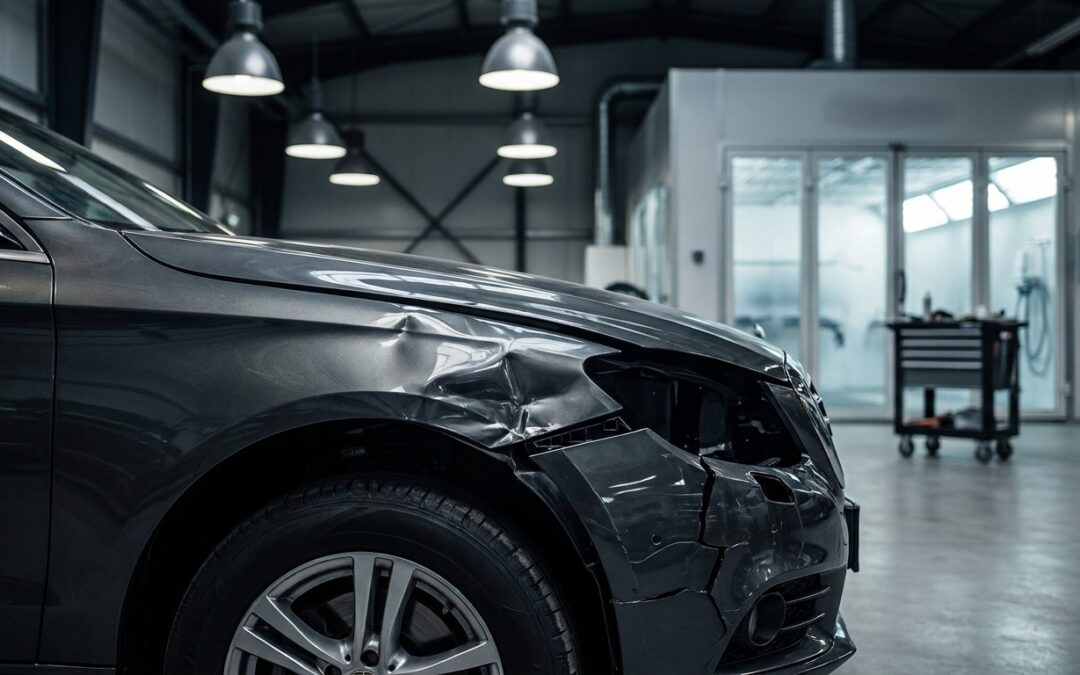
Luxury Car Collision Repair Gilbert AZ: 2026 [7 Shop Checks]
A dented door on a Civic and a dented door on an Audi A6 are not the same repair, even if the dent looks identical. Luxury and European vehicles carry aluminum body panels, multi-stage metallic and pearl paint systems, and sensor arrays packed into bumpers and mirrors that most shops never have to think about on a daily basis. If your BMW, Mercedes, Audi, Lexus, Porsche, Land Rover, Genesis, or Volvo was just in a collision in Gilbert, Mesa, Chandler, Tempe, or Queen Creek, the shop you pick matters more than it would for an average daily driver. This guide walks through exactly what to verify before you hand over the keys.
Network Collision Repair is a family-owned body shop on Gilbert Road that has repaired East Valley vehicles of every make since 1995, under our parent company Network Automotive. We are not a dealer collision center and we do not claim factory certification on any single brand — what we can tell you honestly is what a luxury vehicle actually needs after a crash, and what questions separate a shop that handles it correctly from one that is guessing.
Want a Written Estimate Before You Decide Where to Go?
Send us photos of the damage or bring the vehicle by. We’ll give you a line-itemed estimate you can compare against the dealer’s quote, no pressure either way.
What Makes Luxury Car Collision Repair Different
Three things separate a luxury or European vehicle repair from a standard one, and all three show up the moment a panel gets pulled off the car.
1. Aluminum and Mixed-Material Panels
Many luxury and performance vehicles use aluminum hoods, fenders, doors, or entire body structures (Audi’s A6 and A8, Jaguar’s XF, and most Land Rover models are heavily aluminum). Aluminum cannot be welded with the same equipment or technique as steel — it work-hardens differently, conducts heat differently, and requires dedicated tools kept isolated from steel dust to avoid galvanic corrosion. A shop that treats an aluminum fender like a steel one will leave you with a panel that looks fine and corrodes from the inside within a couple of years.
2. Multi-Stage Metallic, Pearl, and Tri-Coat Paint
BMW’s Alpine White, Mercedes’ Obsidian Black, and Lexus’s premium metallics are not single-stage colors. They’re built in layers — a base color coat, sometimes a pearl or mica mid-coat, then clear — and the exact ratio shifts depending on how much Arizona sun has faded your specific car since it left the factory. Getting that match right takes a digital spectrophotometer reading of your actual panel, not a paint code pulled from a chart.
3. Sensors Hidden Everywhere
Adaptive cruise radar in the front bumper, blind-spot radar in the rear bumper corners, a forward camera behind the windshield, parking sensors across both bumpers — on a modern 3 Series, E-Class, or RX, there can be a dozen sensors involved in even a moderate front or rear hit. Every one of them has to be recalibrated after the panel it’s mounted in is replaced or repainted, or the safety systems built into the car simply won’t work correctly.
4. Tighter Panel Gaps and Trim Fitment
Luxury manufacturers hold panel gaps to tighter tolerances than mainstream brands, and the trim pieces, moldings, and badges that finish off a repair are often unique to a specific trim level or model year. A fender that’s off by a millimeter or two is invisible on a lot of vehicles; on a luxury coupe with a crisp character line running the length of the body, it’s the first thing a trained eye notices. Getting that fit right takes patience during disassembly and reassembly that a rushed repair simply skips.
How Network Collision Handles Luxury and European Repairs
We’re an all-makes family shop, not a brand-specific dealer collision center — which means a BMW, a Lexus, an Audi, a Mercedes, a Porsche, and a Genesis can all be on our floor the same week. What that buys you is a shop that treats each one on its own terms rather than running every car through one generic process:
- Aluminum repaired as aluminum. Dedicated tools and a separated work area keep aluminum and steel repair from cross-contaminating, with the panel pulled and measured rather than muscled straight by eye.
- Color-matched with a spectrophotometer on every refinish. We read your actual panel’s current color, not a factory code, which matters even more on a car with a complex pearl or metallic finish.
- ADAS recalibration built into the repair plan, not an afterthought discovered at pickup. If a bumper, windshield, or mirror housing with a sensor in it comes off the car, recalibration goes on the estimate from day one.
- A written, line-itemed estimate that separates OEM parts, aftermarket parts, and labor so you can see exactly what you’re paying for and compare it to any other quote.
We don’t claim factory certification for any specific brand, and we won’t pretend otherwise. What we will do is show you the frame measuring system, the booth, and walk you through exactly how your specific vehicle will be repaired before you commit to anything.
Common Ways Luxury Vehicles Get Damaged in the East Valley
The damage we see on luxury and European vehicles in Gilbert tends to follow a few patterns, and each one has its own repair considerations.
- Parking lot door dings and curb rash. Tighter panel gaps mean a shopping-center door ding that would buff out on a mainstream sedan can crease a crisp character line on a luxury coupe, and low front bumpers scrape on curbs and steep driveway aprons more easily than a standard sedan’s.
- Front bumper and sensor damage from low-speed hits. Because so many sensors live in the front fascia, even a minor nose-to-tail tap in East Valley traffic can mean a cracked bumper cover plus a radar unit that needs to come out, be reinstalled, and be recalibrated.
- Rear quarter panel and bumper damage from reversing incidents. Rear-corner radar for blind-spot and cross-traffic alert is common on luxury SUVs and sedans, so a reversing fender-bender often carries a recalibration step that an owner wouldn’t expect from the visible damage alone.
- Hail and monsoon debris on larger, flatter body panels. Bigger hoods and roofs on luxury SUVs mean more surface area exposed during an Arizona monsoon, and the metallic and pearl finishes common on these vehicles show hail dimples more visibly than a plain solid color.
None of these require a dealer collision center specifically — they require a shop with the right tools and the discipline to use them every time, regardless of badge on the hood.
7 Questions to Ask Before You Trust a Shop With a Luxury or European Vehicle
- Do you have aluminum-specific repair tools, kept separate from steel work?
- Do you color match with a spectrophotometer, or just pull a factory paint code?
- Is ADAS recalibration included in the written estimate, or billed as a surprise later?
- Will you specify OEM parts vs. aftermarket parts in writing, line by line?
- Can I see the frame measuring system and the booth before I decide?
- What’s your workmanship warranty, and is it in writing?
- Will you deal directly with my insurance adjuster and write supplements if the scope is bigger than their first estimate?
A shop that answers all seven clearly and without hesitation is one you can trust with a car that costs more to get wrong.
↓ Have a Dealer Quote Already?
Bring it in. We’ll write an honest second-opinion estimate on the same repair so you can compare line items side by side before you commit your car to anyone.
Why an Independent Family Shop Instead of a Dealer Collision Center
Dealer collision centers are not the only option, even though the dealer is often the first name an owner hears after a crash. Arizona law gives you the right to choose your own repair shop, regardless of what your insurance company or the dealer suggests. Network Collision Repair is a non-DRP independent shop, meaning we don’t have a negotiated pricing agreement with any insurance carrier that caps what we can write for your repair. If your luxury vehicle needs more than the insurer’s first estimate assumed — which is common once aluminum work, ADAS recalibration, and multi-stage paint are all accounted for — we write the supplement and advocate for the correct scope, not the cheapest one. See our full breakdown of your right to choose a body shop in Arizona for the exact statute and how insurer steering tactics actually sound on the phone.
The trade-off with a dealer collision center is usually wait time and personal attention: your car becomes one of dozens moving through a high-volume pipeline, often with a loaner car wait list and a service advisor who may not be the same person twice. A family shop means the person who answers the phone is the same person who can walk out to your car and show you what’s happening with it, from drop-off to the day you pick it up.
That doesn’t mean a dealer collision center is the wrong choice for everyone. Some repairs, particularly those requiring a specific proprietary tool the manufacturer restricts to franchised dealers, genuinely need to go there. The point is that you get to make that call yourself, with full information, rather than assuming the dealer is the only option because that’s the first name that comes up after a crash.
What It Costs
Luxury and European parts run higher than mainstream brands, and labor on aluminum or sensor-heavy panels takes longer than a comparable steel repair — so expect luxury repairs to land toward the upper end of typical ranges rather than the low end. Every estimate still depends on your specific vehicle and damage, but here’s the honest range by repair type.
| Repair Type | Typical Range | Luxury/European Notes |
|---|---|---|
| Paintless dent repair | $75 – $500 | Works well on steel panels; aluminum dents often need more careful, slower technique at the higher end |
| Bumper repair/replacement | $150 – $1,800 | Luxury bumpers packed with radar and parking sensors usually land near the top, plus recalibration |
| Panel refinish (per panel) | $400 – $900 | Multi-stage metallic/pearl colors and spectrophotometer matching push toward the top of the range |
| Frame/structural repair | $1,200 – $14,000 | Aluminum structural sections and OEM-spec part sourcing add cost over an equivalent steel repair |
Insurance typically covers collision repair costs after your deductible when the claim is covered, whether you’re going through your own policy or the at-fault driver’s. We walk through how that process actually works here.
Get a Real Number for Your Vehicle
Ranges only tell you so much. Bring your BMW, Mercedes, Audi, Lexus, Porsche, or any other make in and we’ll give you a written estimate specific to your damage.
Structural Damage on a Luxury Chassis
A harder hit on a luxury or European vehicle raises the stakes further. Many newer luxury platforms mix aluminum and high-strength steel in the same structure, with crumple zones engineered to very tight tolerances. A proper structural inspection uses computerized measuring to compare your car’s actual dimensions against the factory spec, in three dimensions, not just a visual check for obvious bends. Hidden structural damage on these platforms can surface weeks later as uneven tire wear, a car that pulls to one side, or doors that no longer seal evenly, which is exactly why a drive-by look is never enough on a vehicle like this.
Luxury Car Collision Repair FAQ — Gilbert, AZ
Do I have to take my luxury car to the dealer for collision repair?
No. In Arizona, you have the right to choose any repair shop you want after a collision, regardless of what your insurer or the dealer recommends. A qualified independent shop can repair most luxury and European vehicles to the same standard, often with shorter wait times and more direct communication.
Are aluminum body panels repaired differently than steel panels?
Yes. Aluminum requires dedicated tools kept separate from steel work, different joining techniques (often rivet bonding rather than welding), and careful handling to avoid galvanic corrosion where aluminum and steel meet. A shop without the right aluminum-specific setup shouldn’t be doing structural aluminum repair.
Will my car’s safety sensors work correctly after the repair?
They should, but only if ADAS recalibration is built into the repair plan. Any bumper, windshield, or mirror housing that contains a radar unit or camera needs to be recalibrated after replacement or repaint. Ask any shop you’re considering whether recalibration is included in the written estimate before work starts, not discovered afterward.
How does paint matching work on metallic or pearl luxury finishes?
A digital spectrophotometer reads the actual color of your specific panel, accounting for how it has faded or shifted since the car left the factory, then computes a custom mix rather than relying on the generic factory paint code. This matters more on multi-stage metallic and pearl colors than on simple solid colors. More detail on how color matching works here.
Does my insurance company get to pick where my luxury vehicle is repaired?
No. Your insurer can recommend a preferred shop, but the decision is yours under Arizona law. If the repair ends up needing more than the insurer’s first estimate assumed, which is common with aluminum panels and ADAS recalibration, a shop that isn’t locked into that insurer’s program can write the supplement and advocate for the correct scope.
Do you work on European makes like Audi, Mercedes, Porsche, and Land Rover?
Yes. We repair all makes and models for East Valley families and don’t claim factory certification on any single brand, but we do have the aluminum-capable tools, spectrophotometer color matching, and ADAS recalibration process that a luxury or European repair actually requires.
How much does luxury car collision repair cost in Gilbert?
It depends heavily on the vehicle and damage, but luxury repairs generally land toward the higher end of typical ranges: paintless dent repair runs $75–$500, bumper work $150–$1,800, panel refinishing $400–$900 per panel, and structural repair $1,200–$14,000 depending on severity. A written estimate specific to your vehicle is the only way to get a real number.
What if I already got a quote from a dealer collision center?
Bring it in. A second, line-itemed estimate on the same damage lets you compare exactly what’s included, what parts are OEM vs. aftermarket, and whether ADAS recalibration and paint matching are accounted for the same way.
Trust Your Luxury Vehicle to a Shop That Shows Its Work
Whether it’s a BMW, Mercedes, Audi, Lexus, Porsche, Land Rover, or anything else in your driveway, the questions above will tell you more than any star rating. Ask them, watch how a shop answers, and pick the one that doesn’t flinch.
Or call us directly at (480) 691-2299 · 1021 N Gilbert Rd Unit 105, Gilbert, AZ 85234
Related reading: BMW Collision Repair · Lexus Collision Repair · Car Paint Matching Gilbert AZ · Structural Damage Inspection · Can I Choose My Own Body Shop in Arizona · Insurance Claim Help