
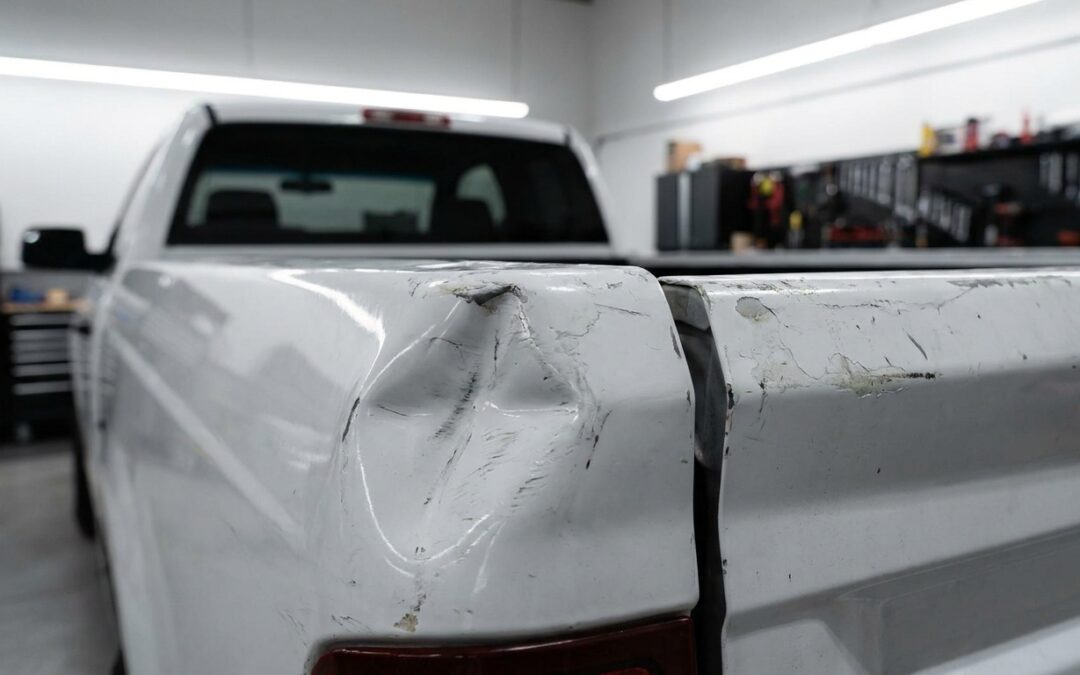
Work Truck Body Repair Mesa AZ: 2026 Guide (7 Warning Signs)
A dinged ladder rack or a crumpled tailgate doesn’t just look bad on a work truck, it slows down a Mesa contractor’s whole week. Network Collision Repair is a family-owned, all-makes body shop in Gilbert that’s been fixing trucks for East Valley trades and small businesses since 1995, and this guide walks through what actually goes into repairing a work truck’s body, bed, and rack hardware without putting the truck out of commission longer than it has to be.
Search Mesa for “work truck body repair” and you mostly get directory listings and a scattering of generic shop pages that treat a contractor’s truck the same as a commuter’s sedan. It isn’t the same job. A work truck carries a ladder rack bolted through the bed rail, a company wrap that cost real money to print and install, a toolbox mounted to the bed floor, and a schedule that doesn’t pause for a repair. A shop that doesn’t plan around those things ends up doing the collision repair right and everything around it wrong, while leaving you to sort out a crooked rack or a wrap that no longer lines up.
Mesa’s trade and service-vehicle traffic is heavy enough that a dented bed rail or a hit ladder rack is almost a routine cost of doing business, not a rare event. Tight job-site parking, material loading and unloading, backing up to stacked pipe or pallets, and long days on surface streets all add up to more body damage per mile than a typical commuter sees. What’s rare is a shop nearby that’s set up to handle the commercial-vehicle details on top of the collision repair itself.
What “Work Truck Body Damage” Actually Covers
Work trucks take a different kind of abuse than a daily-driver car. The damage patterns that show up most often on Mesa job sites and work lots include:
- Bed rail and sidewall damage from material loading, backing into stacked pipe or lumber, or a ladder shifting under braking.
- Ladder rack mounting damage, where the rack itself survives but the bolts have torn through sheet metal, or the rack took a hit and bent enough to throw the whole load off balance.
- Tailgate dents and misalignment from tie-downs, trailer hitch mishaps, or someone backing a dumpster into it.
- Bumper and fender damage from tight job-site parking, curb strikes, and the general wear of a truck that spends more time off pavement than on it.
- Wrap and decal damage where the panel underneath a company logo gets dented or scratched, which complicates the repair because the paint has to match under a wrap that may or may not be reusable.
- Toolbox and bed-floor mounting damage where hardware has worked loose or torn through the bed metal.
- Frame and structural damage from a real collision, which on a work truck often gets masked by how tough the truck looks on the outside.
Most of these show up gradually. A ladder rack that’s been re-bolted twice after minor hits, a tailgate that doesn’t latch quite right, a bed rail with a crease nobody’s gotten around to fixing. None of it is an emergency on its own, but it adds up, and eventually a small fix becomes a bigger one. A fender bender on Mesa’s job-site-heavy streets is often the moment a contractor finally deals with all of it at once.
How Network Collision Handles a Work Truck Repair
Network Collision Repair is a family shop, not a franchise, and the approach to a work truck reflects that. A few things we do differently when a contractor’s truck comes in:
We work around the rack and the wrap, not through them
Before any panel comes off, we document exactly how the ladder rack, toolbox, and any bed accessories are mounted so they go back exactly where they were. If a wrap or decal is intact and just needs to come off a damaged panel temporarily, we handle the removal carefully enough to reinstall it. If the wrap itself is damaged, we’ll tell you honestly whether it can be salvaged or whether you’re better off budgeting for a reprint once the body work is done.
We treat every make the same way: properly
Mesa and Gilbert work trucks are overwhelmingly Ford, Chevy, GMC, and Ram, and we repair all of them. A crushed F-150 bed rail, a Silverado tailgate that won’t latch, a Sierra ladder rack mount, a Ram 2500 that took a hit while towing: the process is the same whether the badge on the tailgate is blue, red, or Mopar. If you want make-specific detail, our Ford collision repair page, Chevy body shop page, GMC collision repair page, and Ram truck collision repair page go deeper on each. For the general case, our pickup truck collision repair page covers the broader picture of what truck-specific repair work involves.
We measure before we guess
A truck that looks fine from the driver’s seat can still be sitting on a bent frame rail or a tweaked bed mount. We use computerized measuring to check the truck against factory specifications rather than eyeballing it, which matters even more on a work truck that’s going to keep hauling heavy loads every day after it leaves our shop. If a frame or bed-mount issue turns up, we’ll walk you through what that means; our frame damage repair page explains the unibody-versus-ladder-frame distinction and how we confirm a straight repair.
We plan around your downtime, not just the repair
A contractor’s truck sitting idle costs real money every day it’s off the road. We scope the repair up front, order parts before teardown whenever the damage allows it, and give you a realistic timeline instead of a vague one. If a rental or loaner is part of your insurance coverage, we’ll help you sort out the logistics so the gap between trucks is as short as possible.
Get Your Work Truck Back on the Road
Tell us what happened and we’ll walk you through the repair and the claim.
What Work Truck Body Repair Costs in 2026
Every truck and every impact is different, but these are the honest 2026 ranges we see most often on work trucks in the East Valley:
| Repair Type | Typical 2026 Range | Notes |
|---|---|---|
| Paintless dent repair (rack hits, minor bed dents) | $75 – $500 | Works when paint isn’t broken and the panel hasn’t been stretched |
| Bumper repair or replacement | $150 – $1,800 | Depends on sensors, brackets, and whether it needs to be repainted to match a wrap |
| Panel refinish (bed side, fender, tailgate) | $400 – $900 | Includes prep, paint matching, and clear coat; wrap reprinting is separate |
| Frame or structural repair | $1,200 – $14,000 | Wide range depending on severity; computerized measuring confirms what’s actually needed |
These ranges aren’t quotes. The only way to get an accurate number is to have the damage looked at in person, because a dent that looks simple can hide a cracked bracket, and a deep scrape that looks dramatic can sometimes be a straightforward panel refinish. What we won’t do is pad a repair with work that isn’t needed just because insurance is involved.
Commercial accessories add their own line items. A ladder rack remount, toolbox reinstallation, or wrap reprint for a single panel typically runs separately from the body repair itself, and we’ll break those costs out individually so you can see exactly what’s collision repair versus what’s accessory work. If your policy covers the collision damage but not the wrap (most personal auto policies don’t treat a company wrap as part of the vehicle), we’ll flag that distinction up front rather than let it surprise you at pickup.
Keeping Your Wrap, Decals, and Rack Intact
For a lot of Mesa trade businesses, the truck is a rolling billboard, and the wrap or decal package represents real marketing spend. A few things we pay attention to on every job:
- Panel-by-panel wrap assessment. We tell you honestly which panels can keep their existing wrap material and which ones will need new vinyl after refinishing, since fresh paint and old wrap vinyl don’t always bond well together.
- Color and texture matching under the wrap line. Even on a fully wrapped truck, the factory paint underneath still needs to match at panel edges, door jambs, and anywhere the wrap doesn’t fully cover.
- Rack and hardware reinstallation. Ladder racks, pipe racks, and ARE or similar toolboxes get reinstalled to the same torque and alignment they came off at, not just bolted back on wherever it’s convenient.
- Decal and lettering placement notes. If individual decals rather than a full wrap are involved, we document their exact position before removal so a reprint lines up the same way.
Minimizing Days Off the Road
A single truck down is painful for a solo contractor and disruptive for a small crew. A few ways we keep that window as short as possible:
- Same-week estimates so you’re not waiting around to find out what you’re dealing with.
- Parts ordered ahead of teardown whenever the scope of damage is clear enough to do so safely.
- Direct communication with your insurance adjuster so supplement approvals don’t sit in a queue.
- Realistic, honest timelines, including telling you up front if a specific part (certain OEM trim pieces, for example) is on backorder and likely to add time.
If the truck isn’t drivable and you’re waiting on parts or an adjuster decision, ask us about rental coverage options under your policy before you assume you’re stuck paying out of pocket for a loaner.
Arizona’s climate adds one more reason not to let bed and panel damage sit. Chipped paint and exposed bare metal don’t last long once monsoon humidity and summer heat get into them, and a small scrape that would stay cosmetic in a milder climate can start forming surface rust within weeks here. Getting a damaged panel properly repaired and resealed sooner rather than later protects the truck’s resale value and keeps a cosmetic issue from becoming a corrosion issue.
Don’t Let a Dented Rack Slow Down Your Crew
Get your truck looked at and get a real timeline, not a guess.
Insurance, Steering, and Your Right to Choose
If the damage came from a collision, your insurer may suggest a “preferred” or network shop. Under Arizona law, that suggestion is just that: a suggestion. You are legally entitled to choose any licensed body shop you want, including an independent, family-owned shop that isn’t part of any insurer’s direct-repair network. Network Collision Repair is intentionally independent. We work for you, the truck owner, not for an insurance company’s volume agreement, which means our priority is getting the repair done right rather than keeping an insurer’s preferred-vendor numbers favorable.
That doesn’t mean we’re difficult to work with on claims, it’s the opposite. We handle the estimate, the supplement process, and the back-and-forth with your adjuster every day, and we’ll explain the process in plain language instead of insurance jargon. If your insurer is pushing back on your choice of shop, our Mesa collision repair page and the broader East Valley service area information can help you understand your options.
For a fleet of two or three work trucks, this matters even more. A DRP shop’s volume agreement with an insurer isn’t built around a small business’s need to get a single truck back in rotation fast, it’s built around the insurer’s own repair-cost targets. An independent shop that knows your trucks and your timeline can prioritize the job that’s actually costing you money, not just the one that’s next in a queue.
7 Signs Your Work Truck Needs More Than a Quick Fix
- The tailgate won’t latch flush or needs to be slammed to close.
- The ladder rack sits visibly crooked compared to before the hit.
- A bed rail or sidewall has a crease you can feel with your hand, not just see.
- Doors don’t open and close with the same resistance on both sides.
- There’s a gap change anywhere a panel meets another panel (hood, bed, cab).
- The truck pulls slightly to one side even though the tires and alignment are fine.
- A dash warning light (airbag, TPMS, backup camera) came on after the incident and hasn’t gone off.
Not Sure What You’re Looking At?
Tell us what happened and send a couple of photos if you have them. We’ll tell you plainly whether it’s a quick panel fix or something that needs a full look before your truck goes back to work.
Frequently Asked Questions
Do you work on commercial and fleet work trucks, not just personal pickups?
Yes. We regularly repair pickup trucks used for trades, contracting, landscaping, and small-business fleets around Mesa and the greater East Valley, including trucks carrying ladder racks, toolboxes, and wraps.
Can you repair my truck without removing my company wrap?
Often, yes, if the damaged panel isn’t being refinished. If a panel does need to be repainted, we’ll tell you honestly whether the existing wrap material can go back on or whether that panel needs a wrap reprint, so you can budget for it ahead of time.
Will my ladder rack or toolbox be reinstalled correctly?
Yes. We document mounting points and torque specs before removing any rack-mounted hardware and reinstall it to match, rather than just bolting it back wherever it fits.
Is my truck safe to keep driving with a damaged bed or tailgate?
It depends on what’s damaged. A cosmetic dent is usually fine to drive on for a few days. A tailgate that won’t latch, a bed rail with structural creasing, or anything affecting how the bed holds a load is worth having looked at before you keep hauling material on it.
Do I have to use the shop my insurance company recommends?
No. Arizona law gives you the right to choose any licensed body shop for a covered repair, regardless of which shop your insurer suggests. Network Collision Repair is an independent, non-DRP shop, which means we answer to you, not to an insurer’s network agreement.
How long will my work truck be in the shop?
It depends on the damage and parts availability, but we give you a real estimate after inspection rather than a generic number, and we communicate proactively if anything (like a backordered part) changes the timeline.
Do you handle RVs, box trucks, or semi-trucks?
No. We repair pickup trucks and passenger vehicles. We don’t service motorhomes, box trucks, or semi-trucks.
Can you help if the damage is from another driver, not my own job-site mishap?
Yes. Whether the damage came from a job-site incident or someone else hit your truck, we’ll walk you through the estimate and work directly with the at-fault party’s insurer or your own coverage, whichever applies.
Get Your Mesa Work Truck Back to Work
Network Collision Repair has been a family-owned, all-makes body shop in Gilbert since 1995, and we understand that a work truck down is a business slowed down. Call (480) 691-2299 or reach out below to get your truck looked at.
Related reading: Collision Repair in Mesa, AZ · Pickup Truck Collision Repair · Ram Truck Collision Repair · Frame Damage Repair · All Services