
Windshield Chip Repair Gilbert AZ: 2026 Guide [30-Min Fix]
A rock chip on your windshield looks small today. Give it a hot Gilbert afternoon, a cold morning defrost, and one pothole on the 202, and that small chip can turn into a crack that runs the length of the glass overnight. The good news: most chips caught early can be repaired in about 30 to 45 minutes, often at no out-of-pocket cost. This guide covers what actually determines whether your chip is repairable, what it costs in 2026, and when repair stops making sense and replacement takes over.
Network Collision Repair is a family-owned shop on Gilbert Road that has been fixing East Valley vehicles since 1995. Windshield chip repair is one of the fastest, most affordable services we offer, and it is also one of the most misunderstood. Drivers either ignore a chip until it cracks, or they assume every chip means a full windshield replacement. Neither is true. This guide walks through the actual rules.
Not Sure If Your Chip Can Be Repaired?
Send us a photo of the chip and we will tell you honestly whether resin repair will hold or whether you are looking at a replacement. Free, no pressure.
What a Windshield Chip Actually Is
A windshield is laminated safety glass: two layers of glass bonded around a plastic interlayer. When something strikes the outer layer hard enough, it fractures the glass without going all the way through. The result is one of a few common patterns:
- Bullseye: a dark, circular chip with a cone-shaped break, usually from a direct rock strike.
- Star break: a small central impact point with cracks radiating outward like spokes.
- Combination break: a bullseye and star break together, common with a harder or faster impact.
- Surface pit: a shallow chip that only marks the outer layer, no real cracking.
In Gilbert and the East Valley, most chips come from three sources: gravel and debris kicked up on the 202 and US-60, sudden temperature swings (a 115-degree windshield hit by cold AC air, or a cold morning defrost on a hot glass surface), and haboob-driven dust and grit during monsoon season. Arizona sun and heat cycling are also why a chip that sat fine for months can suddenly spread on the first cool morning of fall.
Repair or Replace? The Rules That Actually Matter
Insurance companies, glass shops, and auto glass standards (AGRSS, the industry safety standard) generally agree on the same criteria. Here is the real checklist.
Is Your Chip Repairable? Check These Five Things
- Size. Smaller than a quarter (about 1 inch) for a simple chip, or smaller than a dollar bill (about 3 inches) for a star break or crack, is generally repairable.
- Location on the glass. Damage within 2 inches of the edge of the windshield is a poor repair candidate. Edge damage compromises structural integrity and tends to spread fast.
- Location relative to the driver. A chip directly in the driver’s primary sightline can usually be repaired, but the resin leaves a small visual blemish that some drivers prefer to avoid in their direct line of sight. We will tell you honestly if that applies.
- Depth. If the break has penetrated both layers of glass, or the plastic interlayer is exposed and contaminated, repair will not hold. That is a replacement.
- Number of chips. One or two isolated chips: usually repairable. Three or more, or a spreading crack over 6 inches: usually replacement.
The other variable that matters more than any of the above: time. Dirt, moisture, and washer fluid work into a chip within days and weaken the resin bond. A chip repaired within a week of impact has a much higher success rate than one that sat through a month of Gilbert dust and sprinkler overspray.
Already Have a Crack Instead of a Chip?
If it has spread past 6 inches or reached the edge, repair is off the table, and that is fine. We will give you an honest, written replacement quote instead of trying to sell you a repair that will not hold.
How Network Collision Repairs a Chip
Resin injection repair is a precise process, not a squeeze of glue and a prayer. Here is what actually happens:
- Inspection. We check size, depth, location, and contamination before quoting anything, because not every chip should be repaired.
- Cleaning and drying. Debris and moisture are cleared from the break using controlled suction, since trapped moisture is the number one reason a repair fails later.
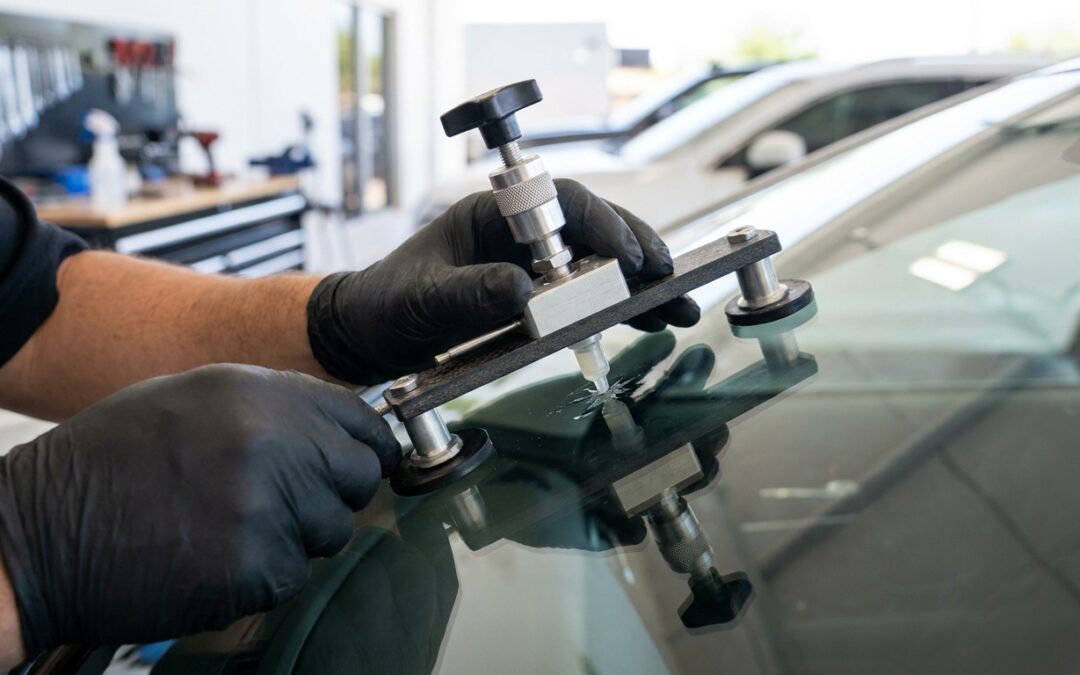
- Vacuum and resin injection. A specialized injector pulls a vacuum on the break to remove trapped air, then injects an optically clear resin under pressure so it fills the fracture completely, not just the surface.
- UV curing. The resin is hardened under UV light, which bonds it to the glass and restores most of the original structural strength.
- Polish and inspect. The surface is polished flat and the repair is inspected for clarity before you drive off.
A well-executed repair typically restores 80 to 90 percent of the glass’s original strength at that point and stops the break from spreading. It will not make the chip invisible. There is almost always a faint mark left behind, which is the honest tradeoff for a 30-minute, low-cost fix instead of a full glass replacement.
How to Protect Your Windshield From Chips in the East Valley
You cannot avoid every rock on the freeway, but a few habits meaningfully cut down how often you end up needing a repair in the first place:
- Leave more following distance on the 202, US-60, and Loop 101. Most chips come from debris kicked up by the vehicle directly in front of you. An extra two or three car lengths gives debris time to fall before it reaches your glass.
- Avoid gravel trucks and landscaping trailers when you can. Loose gravel loads are one of the most common chip sources in the East Valley, and passing wide gives you a much smaller window of exposure.
- Ease into the AC on a scorching windshield. Blasting max-cold AC directly onto glass that has been sitting at 150+ degrees creates rapid thermal stress. Let the cabin vent for a minute with windows cracked before you point vents at the glass.
- Replace worn wiper blades before monsoon season. A dried-out, cracked blade drags grit across the glass every pass and turns small surface pits into worse damage over time.
- Address a chip within days, not months. The single biggest factor in whether a chip stays repairable is how fast it gets treated before dust, washer fluid, and moisture work into the break.
None of this eliminates chips entirely. Arizona highways are simply hard on glass. But catching damage early and getting it into a repair chair within a week keeps most chips in the “quick, low-cost fix” category instead of the “full replacement” category.
What It Costs in 2026 (and the Arizona Zero-Deductible Angle)
Chip repair is one of the few auto body services where insurance often covers the entire cost. Here is how the numbers typically break down for East Valley drivers in 2026:
| Situation | Typical 2026 Cost |
|---|---|
| Single chip repair (out of pocket, no insurance) | $60 – $150 |
| Single chip repair through comprehensive glass coverage | $0 in many cases |
| Multiple chips or a star break repair | $100 – $250 |
| Windshield replacement (crack, edge damage, or too large to repair) | $300 – $900 depending on glass and features |
| ADAS camera recalibration after replacement (if equipped) | $150+, see our ADAS calibration guide |
Here is the important nuance most drivers do not know: Arizona does not have a state law mandating zero-deductible glass coverage the way a small number of other states do. What Arizona does have is a market where many insurance carriers offer a full glass endorsement, either standard or as a low-cost add-on to comprehensive coverage, that waives the deductible specifically for chip repair (and sometimes replacement) because insurers would rather pay for a $100 repair than a $700 replacement claim later. Whether you have that coverage depends entirely on your specific policy and carrier.
Before you pay out of pocket, call your insurance agent and ask one specific question: “Do I have a full glass endorsement, and is the deductible waived for windshield repair?” If the answer is yes, the repair typically costs you nothing and does not raise your rates, since a repair (unlike most claims) is not treated as an at-fault or chargeable event by most carriers.
↓ Want Us to Check Your Coverage Before You Pay Anything?
Send us your insurance info along with a photo of the chip. We will tell you honestly what it looks like your policy covers, and quote the out-of-pocket cost if it does not.
Chip Repair vs. Windshield Replacement
These are two different services, and picking the right one matters for both cost and safety. If you are unsure which situation applies to you, our full windshield replacement guide covers the replacement side in depth, including OEM versus aftermarket glass and ADAS recalibration. Here is the short version of when each applies:
| Chip Repair Makes Sense When | Replacement Is Needed When |
|---|---|
| Chip is smaller than a quarter | Crack is longer than 6 inches |
| Damage is at least 2 inches from the edge | Damage reaches the edge of the glass |
| One or two isolated chips | Three or more chips, or a spreading crack |
| Caught within days of impact | Contamination has already set into the break |
| Break has not reached the inner glass layer | Break penetrates both layers |
If you send us a photo and the honest answer is “this needs a replacement,” we will tell you that directly rather than attempting a repair that will not hold. A failed repair costs you the repair fee and you still need the replacement, so it is never worth guessing.
Why Gilbert Drivers Choose Network Collision Repair
We are not a mobile glass-only outfit that shows up, injects resin, and disappears. We are a full collision and paint shop at 1021 N Gilbert Rd Unit 105 that has handled East Valley vehicles for over 30 years, so if a chip has already turned into a crack that spread into the pillar trim, or if the same rock that hit your windshield also chipped your hood paint, we can handle the whole job in one visit instead of sending you somewhere else for the rest.
We give straight answers: if a chip is a clean repair candidate, we will tell you that and quote a fair price. If it needs replacement, we will not try to talk you into a repair first just to bill you twice. And if you are filing an insurance claim, we can talk to your carrier directly and confirm what your policy actually covers before any work starts. More on working with carriers in our insurance claim help guide.
Windshield Chip Repair FAQ, Gilbert AZ
How much does windshield chip repair cost in Gilbert, AZ?
Out of pocket, a single chip repair typically runs $60 to $150. Many Arizona drivers pay $0 because their comprehensive auto policy includes a full glass endorsement that waives the deductible for chip repair specifically. Check with your insurance agent before assuming either way.
Does Arizona law require insurance to cover windshield repair at no cost?
No. Arizona does not have a state mandate for zero-deductible glass coverage. What exists is a common market practice: many carriers voluntarily offer a full glass endorsement that waives the deductible for repair, because it is cheaper for them than paying for a later replacement. Whether you have it depends on your specific policy.
Can any windshield chip be repaired?
No. Chips smaller than a quarter, at least 2 inches from the edge, and caught before contamination sets in are the best candidates. Cracks over 6 inches, edge damage, or three or more chips usually mean replacement instead.
How long does a chip repair take?
About 30 to 45 minutes for a single chip once you are in the chair. Most drivers wait on-site and drive away the same visit, with no cure-time delay like a full replacement requires.
Will the chip be completely invisible after repair?
Usually not completely. A good repair restores most of the glass’s strength and stops the crack from spreading, but a faint mark typically remains visible on close inspection. That is the honest tradeoff for a fast, low-cost fix.
Will filing a windshield repair claim raise my insurance rates?
Most carriers do not treat a glass repair claim as an at-fault or chargeable event, since it is cheaper for them than a future replacement or, worse, a cracked windshield contributing to an accident. Confirm with your specific carrier, but this is standard practice across most Arizona insurers.
What causes so many windshield chips in Arizona?
Highway gravel and debris on routes like the 202 and US-60, extreme heat and cold cycling (especially AC blasting on a 115-degree windshield), and monsoon-season dust storms that kick up grit at highway speed. Arizona’s temperature swings are also why a stable chip can suddenly spread the first cool week of fall.
Do you replace windshields too if my chip can’t be repaired?
Yes. See our full windshield replacement guide for OEM versus aftermarket glass, ADAS recalibration requirements, and 2026 pricing.
Do I need an appointment, or can I walk in?
Call ahead at (480) 691-2299 so we can confirm we have a technician and the right resin kit ready when you arrive. Most chip repairs can be scheduled same-day or next-day, since the process itself only takes 30 to 45 minutes once you are in the chair.
Are DIY windshield repair kits worth trying first?
They can work for very minor surface pits, but the resin quality, the vacuum strength, and the curing process in a DIY kit are all well below what a shop uses. A poorly done DIY repair can actually make a chip harder to repair correctly afterward, because the low-grade resin has to be drilled out first. For anything bigger than a pinhead, it is worth having it looked at professionally before attempting a kit.
Catch It Before It Cracks
A chip you fix this week costs a fraction of the crack it becomes next month. Send us a photo, or stop by the shop on Gilbert Road, and we will give you a straight answer on repair versus replacement in minutes.
Or call us directly at (480) 691-2299 · 1021 N Gilbert Rd Unit 105, Gilbert, AZ 85234
Related reading: Windshield Replacement Gilbert AZ · Paintless Dent Repair · ADAS Calibration Guide · Insurance Claim Help · Hail Damage Repair · All Services