
Hail Damage Repair Gilbert AZ: 2026 Guide [PDR First]
Monsoon season hits the East Valley every summer, and every summer a batch of Gilbert, Mesa, and Chandler drivers walk out to a car covered in dents that weren’t there the night before. Most hail damage does not require a repaint — it requires paintless dent repair, which is faster, cheaper, and keeps your factory paint intact. But not every dent qualifies, and the insurance side of a hail claim has its own timeline you need to move through correctly. This guide covers what hail actually does to a car, how to tell PDR from a repaint job, and the exact claim steps to follow so you don’t leave money or repair quality on the table.
Network Collision Repair is a family-owned body shop on Gilbert Road, part of Network Automotive since 1995 — 31 years serving the East Valley. Every monsoon season we see the same pattern: a storm rolls through, claim volume spikes across every shop in the Valley, and the drivers who move fast and understand the process get their cars back first. This guide is built from what we’ve seen work.
Just Got Hit With Hail? Get a Free Damage Assessment
Bring the car in or send photos. We’ll tell you honestly whether you’re looking at PDR, a partial repaint, or both — before you file anything with your insurer.
What Arizona Monsoon Hail Actually Does to a Car
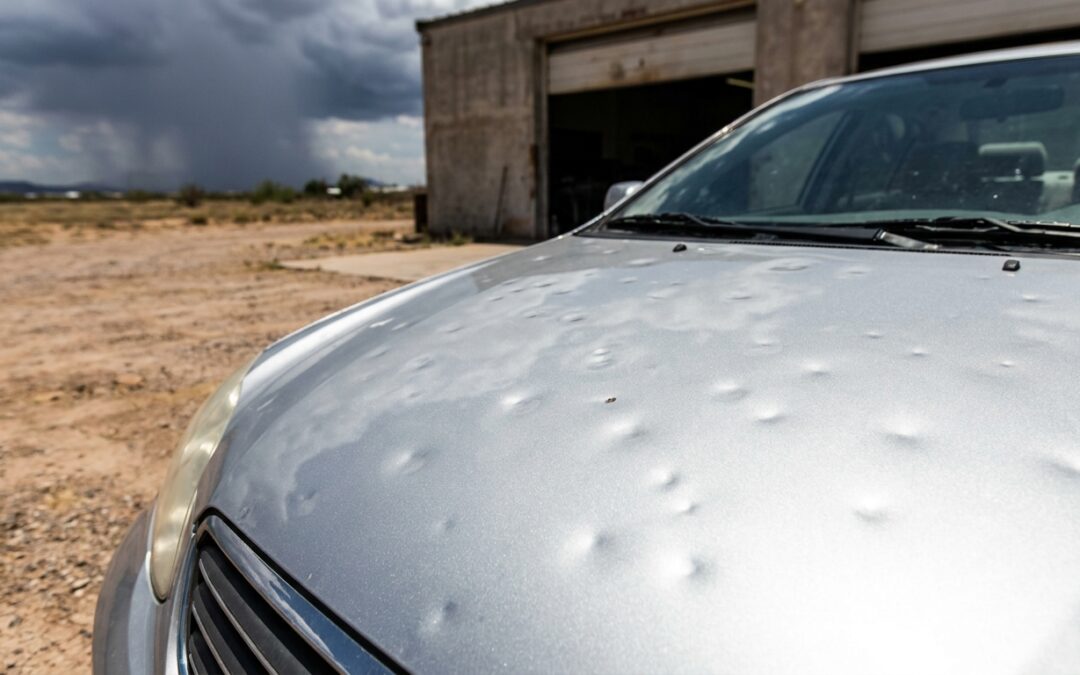
Arizona’s monsoon season runs roughly mid-June through the end of September, and it produces short, violent storm cells that can drop pea-size to golf-ball-size hail in a matter of minutes. Unlike a slow hailstorm in the Midwest, an Arizona monsoon cell moves fast and hits hard — which means the damage pattern tends to be concentrated rather than evenly spread, worse on the horizontal surfaces (hood, roof, trunk lid) that catch the most direct impact.
What that damage looks like depends on hail size and panel material:
- Shallow, round dents on the hood, roof, and trunk — the most common result, and the best candidate for PDR
- Cracked or chipped clear coat and paint at the point of impact, especially on aluminum hoods and larger hail
- Cracked windshields and rear glass, particularly from golf-ball-size stones or debris kicked up by wind
- Damaged mirror housings, antenna, and trim from direct hits or wind-driven debris
- Bent or creased body lines where a dent lands directly on a character line or panel edge — these usually need more than PDR alone
PDR vs. Repaint: Which One Fixes Your Hail Damage
Paintless dent repair (PDR) is a technique where a trained technician massages the dent out from behind the panel using specialized rods and tools, restoring the metal’s shape without cutting, filling, or repainting. It works because most hail dents are shallow, round, and haven’t stretched or cracked the paint. When it’s a fit, PDR is the better repair in almost every way: same-day or next-day turnaround, no color-match risk, and your original factory paint stays on the car — which matters for resale and for any future diminished value conversation.
PDR stops being the right tool once the paint itself is compromised or the dent is too sharp for the metal to relax back into shape. Here’s the general breakdown we use when we assess a hail-damaged vehicle:
| Damage Type | Best Repair Method | Why |
|---|---|---|
| Shallow round dents, paint intact | PDR | Metal wasn’t stretched; paint never has to be disturbed |
| Dozens of small dents across hood/roof | PDR | Far cheaper per-dent than stripping and repainting a whole panel |
| Cracked or chipped paint at impact point | Repaint (panel or spot) | PDR can’t restore finish once clear coat or paint has fractured |
| Dent on a body line or panel edge | Repaint, sometimes panel replacement | Sharp creases rarely relax back to factory shape with PDR alone |
| Large hail (golf-ball+) with deep dents | Combination: PDR where possible, refinish the rest | Mixed damage severity across the same panel is common in AZ storms |
| Aluminum hood or panel with sharp dents | Repaint, sometimes panel replacement | Aluminum has less memory than steel and cracks more easily under stress |
Our paintless dent repair page covers the PDR process itself in more depth if you want the mechanics. This guide focuses on the part that page doesn’t: what happens on the insurance side once hail is involved.
Not Sure If You Need PDR, a Repaint, or Both?
Send us photos of the damage. We’ll tell you honestly which panels are PDR candidates and which need refinishing — before you decide how to file your claim.
The Arizona Hail Damage Insurance Claim Timeline
Hail damage is covered under the comprehensive portion of your auto policy, not liability or collision — which means you need comprehensive coverage on the vehicle for a hail claim to apply at all. If you carry only liability, hail damage generally isn’t covered. Assuming you have comprehensive, here’s the realistic timeline for a Gilbert-area hail claim.
The 6-Step Hail Claim Timeline
- Document immediately. Photograph every panel in daylight before you drive anywhere, and get the vehicle under cover if another storm cell is possible. More hail exposure between the first storm and your inspection muddies which dents belong to which event.
- File the claim as comprehensive, not collision. Call your carrier or file through their app and specify weather/hail damage. Note your comprehensive deductible — it applies here, separate from your collision deductible.
- Get an independent shop estimate before or alongside the adjuster inspection. You are not required to use your insurer’s preferred shop in Arizona. Under ARS §20-469, you have the right to choose your own repair shop regardless of which one the insurer recommends.
- Adjuster inspection and approval. Many carriers now use photo-based virtual inspections for hail claims during high-volume storm periods; others still send an in-person adjuster. Either way, your chosen shop can supplement the estimate if the adjuster misses PDR-eligible dents or underestimates panel count.
- Repair scheduling. After a major monsoon cell, every PDR-capable shop in the Valley gets a wave of bookings at once. Get on a schedule as soon as your claim number is issued rather than waiting for final approval paperwork — most shops can start once the claim is open.
- Repair, final invoice, and delivery. If additional damage is found once panels are inspected up close (a common outcome with hail), your shop writes a supplement directly to the adjuster. You pay your deductible; the shop bills the insurer the rest.
One Arizona-specific wrinkle worth knowing: if hail also cracked your windshield, glass coverage is sometimes handled under a separate, lower or zero-deductible provision depending on your policy — it’s worth asking your carrier specifically about glass. We cover that angle in more detail on our windshield replacement page.
Realistic Cost Ranges for Hail Damage Repair
Hail repair costs swing more than most collision repairs because the real variable isn’t severity — it’s dent count. A car with three dents and a car with sixty dents can have similar-depth damage but wildly different labor hours. Here’s the honest range breakdown for 2026:
| Repair Scope | Typical 2026 Range |
|---|---|
| PDR, single panel or light hail (a handful of dents) | $75 – $500 |
| PDR, multiple panels or moderate hail | $500 – $1,800 |
| Panel refinish (cracked paint, spot or full panel) | $400 – $900 per panel |
| Combination hail claim (PDR + refinish across several panels) | $1,000 – $3,500+, insurance-dependent |
| Structural or panel replacement (rare, severe hail plus prior damage) | $1,200 – $14,000 |
Most straightforward hail claims land in the PDR-only range, and most policies cover the full repair cost above your deductible. The number that actually matters to you is usually just your deductible — the rest is between your shop and the insurer.
Should You File a Claim for Minor Hail Damage?
Not every hail hit is worth running through insurance. If your comprehensive deductible is $500 and the repair itself is a $350 PDR job on two dents, filing a claim gets you nothing — you’d pay the full $350 out of pocket either way, since it’s under your deductible, and you’d have a claim on record for no benefit. The math only favors filing when the repair estimate clearly exceeds your deductible.
A few things worth checking before you decide:
- Get the estimate first. You can’t make a good filing decision without knowing the real repair cost — that’s why we’ll assess damage and give you a number before you touch your insurer.
- Check whether your policy has hail-specific terms. Some Arizona carriers waive or reduce the deductible for glass-only hail damage even if the body deductible stays standard.
- Consider dent count, not just visible severity. A car that looks lightly hit can still have 15-20 small dents once a technician runs a hand over every panel in good light — that adds up past most deductibles quickly.
- Comprehensive claims rarely raise premiums, so the usual hesitation around filing (worrying it’ll cost you later) applies much less to hail than to at-fault collision claims. See the FAQ below for more on that.
If you’re unsure which side of your deductible you land on, that’s exactly the kind of question a free assessment answers before you commit to filing anything.
Protecting Your Car During the Rest of Monsoon Season
You can’t stop a hail cell, but you can reduce your exposure once you know a storm is tracking toward the East Valley. The National Weather Service and most weather apps issue severe thunderstorm warnings with enough lead time to act if you’re paying attention during monsoon afternoons (typically the highest-risk window is mid-afternoon through early evening, June through September).
- Get under a carport, garage, or covered parking the moment a warning hits — even a gas station awning or parking garage helps for smaller hail
- Keep a heavy moving blanket or hail cover in the trunk if covered parking isn’t an option at home or work
- Avoid parking under trees during monsoon storms — wind-driven branches add impact damage on top of hail
- Check your comprehensive coverage before the season peaks, not after a storm already hit — if you’re only carrying liability, hail damage is entirely out of pocket
↓ Want a Hail Damage Checklist Plus a Free Estimate?
We’ll send you a quick pre-claim checklist (what to photograph, what to ask your adjuster) along with a free estimate for your specific damage. No obligation.
Why Choose Network Collision for Hail Damage Repair
Hail repair season is when the difference between an in-house shop and a broker shop shows up fastest. A shop that subs out PDR to a traveling contractor crew is at the mercy of that crew’s schedule — and after a major storm, every shop in the Valley is trying to book the same contractors. We do PDR and refinish work in-house, which means your car doesn’t sit waiting on someone else’s calendar.
- In-house PDR and paint — no subletting to third-party crews passing through after a storm
- Spectrophotometer color match for any panel that needs refinishing, accounting for Arizona sun fade on your existing paint
- We write supplements directly with your adjuster if hidden damage turns up once panels are inspected closely
- Lifetime workmanship warranty, in writing, on both PDR and refinish work
- 31 years in the East Valley under the same family ownership since 1995
We also do honest damage assessment — if a panel is a clean PDR candidate, we tell you that instead of upselling a repaint. And if you already had hail repair done elsewhere and want a second set of eyes, our post-repair inspection service checks for missed dents and paint-match issues before you sign off on the insurer’s final payment.
Ready to Get Your Hail Claim Moving?
Bring the car in for a free assessment and written estimate. We’ll tell you what your policy needs to see and get you scheduled before the post-storm rush fills up.
Hail Damage Repair FAQ — Gilbert, AZ
Does auto insurance cover hail damage in Arizona?
Yes, if you carry comprehensive coverage on the vehicle. Hail is a weather event, so it falls under comprehensive, not collision or liability. If you only carry liability coverage, hail damage typically isn’t covered.
How long do I have to file a hail damage claim after an Arizona monsoon storm?
File as soon as possible, ideally within days. There’s no universal Arizona deadline, but most policies specify a reasonable-time requirement, and waiting risks confusion between multiple storm events if more hail hits before you file. Document and file promptly.
Will PDR fix all my hail dents, or will some need repainting?
It depends on the damage. Shallow, round dents with intact paint are usually perfect PDR candidates. Dents with cracked paint, sharp creases along body lines, or damage on stress-prone aluminum panels often need a partial or full repaint in addition to or instead of PDR. A proper assessment will tell you which panels need which method — it’s common for one car to need both.
Does a hail damage claim raise my insurance premium?
Generally no. Hail is a weather event and considered a not-at-fault comprehensive claim in most states, including Arizona. Comprehensive claims typically don’t carry the same premium impact as at-fault collision claims, though it’s worth confirming with your specific carrier.
Can I choose my own repair shop for a hail damage claim, or do I have to use my insurer’s preferred shop?
You can choose your own shop. Under Arizona law (ARS §20-469), you have the right to select any repair shop you want, regardless of which shop your insurance company recommends or has a direct repair agreement with.
How much does hail damage repair cost in Gilbert, AZ?
Light PDR work runs about $75-$500. Moderate multi-panel PDR runs $500-$1,800. Panels that need refinishing due to cracked paint run $400-$900 each. Most hail claims are covered by comprehensive insurance above your deductible, so your out-of-pocket cost is usually just the deductible.
How long does hail damage repair take?
PDR-only repairs are often same-day or next-day for light damage. Moderate multi-panel hail work typically runs a few days. Jobs that combine PDR with refinishing take longer since paint needs to cure and blend properly. Turnaround also depends on how backed up shops are after a major storm — booking early helps.
Is PDR as good as traditional bodywork for resale value?
When done correctly, PDR is often better for resale value than a repaint, because your factory paint stays fully intact and there’s no repaint to disclose or color-match risk down the road. A properly PDR’d panel is very difficult to detect, even under close inspection.
Hail Hit Your Car? Get It Assessed Before You File.
A five-minute look at your vehicle tells us whether you’re looking at straightforward PDR, a partial repaint, or both — and gives you a real number to bring to your insurer. We book up fast after a monsoon cell, so the earlier you call, the sooner you’re back to a clean hood and roof.
Or call us directly at (480) 691-2299 · 1021 N Gilbert Rd Unit 105, Gilbert, AZ 85234
Related reading: Paintless Dent Repair Gilbert AZ · Insurance Claim Help · Windshield Replacement · Auto Paint Shop · Post-Repair Inspection · All Services