
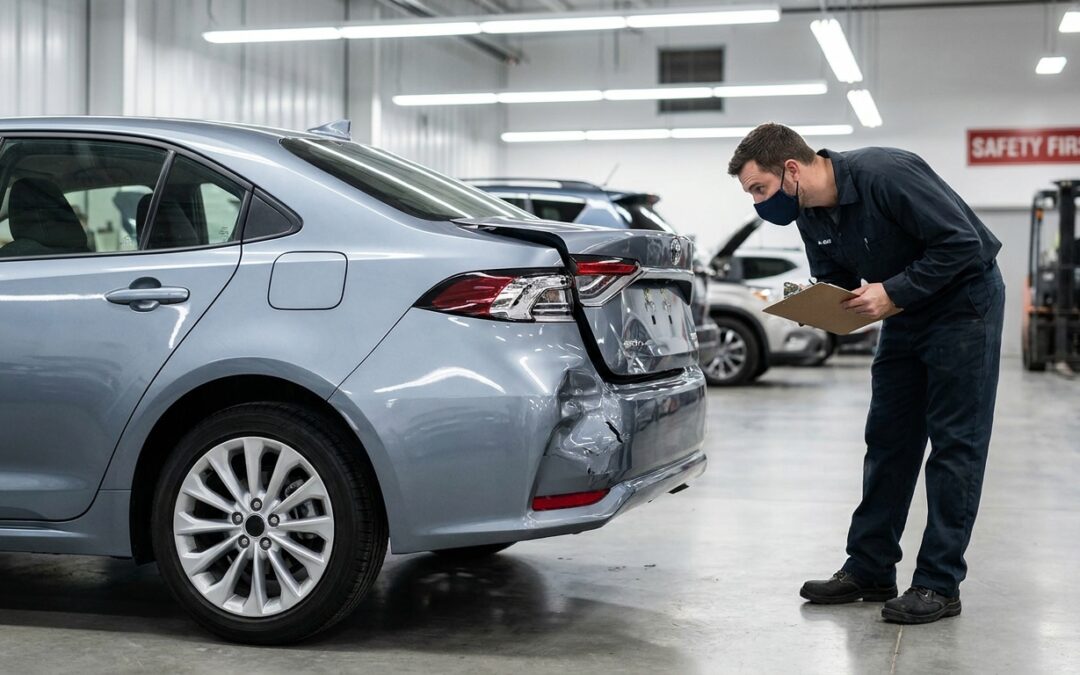
Rear End Collision Repair in Gilbert, AZ: What to Do, What It Costs, and How Long It Really Takes
Rear-end collisions are the #1 most common type of accident in Arizona — about 28% of all crashes statewide and even higher on East Valley arterials like Val Vista, Higley, Power, and the 60. If you just got rear-ended in Gilbert, Mesa, Chandler, or Queen Creek, this guide walks you through exactly what happens next: what kind of damage you’re really looking at (most of it is hidden), what the repair costs in 2026, how long it takes, who pays, and how to make sure your car drives, looks, and protects you the same way it did before the impact.
At Network Collision Repair, we fix rear-end collisions every single week — everything from a 5 mph parking-lot tap that crumpled a bumper cover to a 45 mph freeway hit that pushed the rear quarter into the trunk. Family-owned, Gilbert-based, 30 years on this. The goal of this article is to remove the guesswork so you walk into your repair process knowing more than most insurance adjusters do.
Just Got Rear-Ended in Gilbert?
Send us photos of the damage and we’ll give you a free, honest estimate within one business day — before you talk to the insurance company.
What “Rear-End Damage” Actually Means
Rear-end collisions look deceptively simple from the outside. The bumper cover is the first thing to absorb impact — and on modern vehicles, it’s designed to. The cover (the painted plastic skin you see) hides a foam absorber, then a steel or aluminum reinforcement bar, then the rear frame rails, the trunk floor, the rear panel, and finally the unibody structure that controls how the car crumples to protect occupants. A 10 mph hit can cause invisible damage all the way back through that stack.
Here’s what we typically find on a Gilbert rear-end repair, in order of how often we see it:
- Bumper cover (95% of cases) — cracked, scuffed, or partially detached. Repair or replace.
- Bumper absorber / energy foam (60%) — almost always replaced once impact happens. One-use part.
- Bumper reinforcement bar (40%) — bent or buckled. Cannot be straightened — must be replaced.
- Tail lights / reverse lights (35%) — cracked or popped out of housing.
- Trunk lid / liftgate alignment (25%) — misaligned gaps, rubbing, won’t latch properly.
- Rear quarter panel (15%) — pushed in, buckled, or showing stress lines.
- Rear floor pan / trunk floor (10%) — bent or distorted (now a structural repair).
- Rear frame rails / unibody (5–10%) — the truly serious one. Requires a frame machine.
- Rear sensors / parking cameras / ADAS (35% on cars under 5 years old) — need recalibration after any rear repair.
- Hidden trunk damage — spare tire well crushed, exhaust hangers bent, fuel pump module damage on some sedans.
What to Do in the First 60 Minutes After a Rear-End Collision
Even at low speeds, do this in order — it protects you legally, financially, and medically.
1. Get Safe
If the cars can be moved and the impact was minor, pull onto the shoulder or into a parking lot. Hazards on. Do NOT stand between the cars or in a live travel lane. Gilbert PD will tell you the same thing: priority is your safety, not the cars.
2. Call 911 or 311
If anyone is injured, if airbags deployed, if either vehicle is undriveable, or if there’s any disagreement about fault — call 911. For non-injury minor accidents in Gilbert, 311 dispatches an officer for an Incident Report. Always get a police report number. Insurance handles claims with police reports 3–5x faster.
3. Document the Scene
Photos: damage to both vehicles, license plates, the position of the cars, skid marks, the road, traffic signals, the scene from 30 feet back, and any landmarks (Power Rd & Baseline, etc). Video walking around both cars is even better. Take more than you think you need.
4. Exchange Info
Driver’s license, insurance card photo (front and back), license plate, year/make/model, and a phone number. Don’t take their word — photograph the documents.
5. Don’t Admit Fault
Even if you think you might be partially at fault — don’t say it at the scene. Arizona is a comparative-fault state, and your insurance adjuster will determine fault based on facts and the police report, not on what you said in shock at the scene.
6. Get Checked Medically Within 72 Hours
Whiplash and soft-tissue injuries from rear-end hits often don’t hurt for 24–48 hours. If you wait a week, the insurance company can claim the injury was unrelated. See your doctor or an urgent care even if you feel fine.
7. Call Your Insurance — Then Call a Body Shop
Open a claim with your carrier (or the at-fault driver’s carrier). Then call a body shop you trust and tell them you’d like an independent estimate. You do not have to use the insurance company’s “preferred shop.” Arizona law (ARS §20-469) gives you the right to choose your repair facility.
Need an Estimate Right Now?
Photos + a one-line description is all we need. Free, no obligation, and gives you leverage with the insurance adjuster.
How Network Collision Does a Rear-End Repair
The repair process is the same whether your bumper has a single scuff or your rear frame rail needs to be pulled back into spec. Severity changes the time and parts — not the process.
Step 1: Full Diagnostic Inspection
Every rear-end repair starts with the bumper cover off. Why? Because 80% of structural and absorber damage is invisible until you remove that plastic skin. We document every component with photos, measure panel gaps with a digital gauge, and run a pre-repair scan on the vehicle’s computer to capture every fault code. That scan is non-negotiable on any car built after 2015 because it tells us which sensors got knocked offline by the impact.
Step 2: Insurance Estimate Reconciliation
Insurance estimates are almost always written from photos — and almost always miss hidden damage. We match our findings against the carrier’s estimate line by line, then submit a supplemental estimate for anything they missed. Most of our jobs end up needing a supplemental. That’s normal — not a red flag — and it’s how you make sure you don’t pay out of pocket for damage that should be covered.
Step 3: Frame and Structural Measurement
If the impact pushed past the bumper reinforcement, we put the car on the frame measuring system to verify rail dimensions are within OEM tolerance — usually within 3 mm. If they’re not, we use a frame puller to bring them back into spec. Skipping this step is how you end up with a car that “looks fine” but pulls to one side, eats rear tires, and rattles in the trunk for the rest of its life.
Step 4: Disassembly and Parts
We pull damaged components and order the parts you and the insurance approved — OEM, certified aftermarket, or recycled OEM. We’ll explain the trade-offs honestly: OEM is usually best for newer vehicles and leases; high-quality aftermarket can save money on older vehicles; recycled OEM is great for parts like trunk lids and tail lights.
Step 5: Body and Structural Repair
Dent repair, weld repair on quarter panels, replacement of crumple-zone components. Our welders are trained on the specific steel grades modern vehicles use — high-strength steel and aluminum require different welding processes than 1990s steel.
Step 6: Paint Match and Refinish
Our paint booth is climate-controlled and color-matched with a digital spectrophotometer. We blend new paint into adjacent panels to avoid visible color edges — this is the difference between a repair you can spot from across the parking lot and one nobody will ever notice.
Step 7: ADAS Calibration
Modern vehicles have rear-facing radar, cross-traffic alert, blind spot sensors, and parking cameras. Any rear repair on a 2018+ vehicle requires recalibration of these systems — often static (in the shop with targets) AND dynamic (on a road test). We do both. Insurance covers it. Skipping it means your safety systems may not work in the next near-miss.
Step 8: Final QC and Delivery
Post-repair scan with no fault codes, road test, panel gap measurements, alignment check, and a side-by-side photo comparison so you can see exactly what was repaired. Lifetime workmanship warranty.
Rear End Collision Repair Costs in Gilbert (2026 Pricing)
Pricing varies wildly by severity. Here’s honest 2026 East Valley pricing from a shop that doesn’t hide line items.
| Severity | Typical Damage | Cost Range | Days in Shop |
|---|---|---|---|
| Minor (5–10 mph) | Bumper cover scuff/crack only, no structural | $650 – $1,800 | 2–4 days |
| Moderate (10–25 mph) | Bumper + reinforcement + tail light + ADAS recal | $2,200 – $4,800 | 5–10 days |
| Significant (25–40 mph) | Trunk lid, quarter panel, frame measurement | $5,500 – $9,500 | 10–18 days |
| Severe (40+ mph) | Frame pull, structural welding, full refinish | $9,500 – $18,000+ | 3–6 weeks |
If you have collision coverage, your only out-of-pocket is your deductible (typically $500–$1,000). If the other driver was at fault, you should pay nothing — their carrier pays for everything including a rental car under their property damage liability coverage. We’ll help you sort that out at intake.
How Long Will My Car Be in the Shop?
Honest timeline expectations from our actual Gilbert shop floor:
- Bumper-only repair: 2–4 business days. Most of that is paint cure time, not labor.
- Moderate damage with parts on backorder: 7–14 days. Backorder is the #1 cause of delay in 2026 — a single tail light from a Hyundai or Kia can take 3 weeks. We tell you upfront if a part is going to slow things down.
- Frame/structural work: 14–30 days minimum. There’s no shortcut. Trying to rush a frame repair is how shops fail QC.
- Insurance approval delays: add 2–7 days for supplements to be approved by the adjuster. We push for fast turnaround — some carriers move faster than others.
↓ Free Rear-End Estimate
Send us 4–6 photos (rear straight on, both rear corners, both sides angled, and any close-ups of damage). We’ll send back a written estimate the same day or next morning. No obligation.
Hidden Damage You Should Always Check For
The most expensive mistake in a rear-end repair is settling the claim before you find everything. Once the check is cashed, supplements are very hard to reopen. Always have a body shop verify these BEFORE the claim closes:
Frame Rail Distortion
Even a minor 15 mph rear hit can buckle the rear frame rail by 5–10 mm — not visible to the eye but enough to throw alignment off. Symptoms: car “dog tracks” (rear wheels don’t follow the front), eats rear tires, pulls slightly. A frame measurement check is $0 if you have us look at it as part of the estimate.
Trunk Floor / Spare Tire Well
If your spare tire well is bent inward, the trunk floor took impact — that means the structural floor pan is compromised. Not a cosmetic fix.
Fuel System
On many sedans (Honda, Toyota, Hyundai), the fuel pump module sits just under the rear seat or trunk floor. Hard rear hits can dent the tank or damage pump electrical connectors. Symptom: intermittent fuel gauge readings or check engine lights weeks later.
Exhaust Hangers and Heat Shields
The mufflers and tailpipes hang off the rear of the car. A hit pushes everything forward, bending hangers and snapping plastic clips. You’ll hear it as a rattle on speed bumps if it’s missed.
Rear Suspension Mounts
On vehicles with rear independent suspension, the upper shock mounts and rear control arm bushings sit close to the trunk floor. A hard hit can crack the shock tower — and you won’t feel it until 6 months later when the shock starts leaking.
Sensor Calibration
Rear radar, cross-traffic alert, parking sensors, backup cameras. If any of these light up the dash with warnings or just “feel different” after the repair, calibration was missed.
Insurance: Whose Pays, How It Works
Three scenarios cover 99% of rear-end claims in Arizona.
Scenario 1: You Got Rear-Ended (Other Driver Insured)
Their insurance pays. You file a third-party claim with the at-fault driver’s carrier. They cover repairs, a rental car, and you can also file a diminished value claim in Arizona for the lost resale value of your car post-accident. Most people don’t know about the diminished value piece — we’ll tell you whether your car qualifies.
Scenario 2: You Got Rear-Ended (Other Driver Uninsured or Hit-and-Run)
Your uninsured motorist (UM) coverage kicks in — if you carry it. Most Arizona drivers do. You pay your deductible, your insurance covers the rest, and your rates should NOT go up because the accident wasn’t your fault. If your insurance threatens to raise rates on a UM claim where you weren’t at fault, push back hard.
Scenario 3: You Rear-Ended Someone Else
This is the harder one. Your property damage liability covers the other driver’s car. Your own car is covered only if you have collision coverage — if you only carry liability (state minimum), your own repair comes out of your pocket. Rear-end at-fault claims raise rates at renewal in most cases, by 20–40%.
Read our deeper guide: Insurance Claim Help in Gilbert, AZ.
Why Choose Network Collision Repair
- 30 years repairing East Valley collision damage. We’ve seen every rear-end pattern and pulled every common frame rail back into spec.
- Frame machine on-site. Many shops sublet frame work — we don’t. Faster, cheaper, and we control quality end to end.
- In-house ADAS calibration. No driving your car to a dealership for sensor recalibration after we already had it for 2 weeks.
- Honest supplemental process. We fight insurance for missed damage so you don’t have to.
- Lifetime workmanship warranty. If anything we touched fails, we fix it. Period.
- We help you with the at-fault carrier directly. So you don’t pay your own deductible when you shouldn’t have to.
- Family-owned, Gilbert local. See our reviews from your neighbors at our About page.
Rear-End Collision Repair FAQ — Gilbert, AZ
How much does rear-end collision repair cost in Gilbert?
2026 ranges in the East Valley: $650–$1,800 for a bumper-cover-only repair, $2,200–$4,800 for moderate damage including reinforcement and ADAS recalibration, $5,500–$9,500 for damage involving the trunk and quarter panel, and $9,500–$18,000+ for frame pulls and structural work.
Do I have to use the body shop my insurance recommends?
No. Arizona Revised Statute §20-469 explicitly gives you the right to choose your own collision repair shop. Your insurance company can recommend a “preferred” or “Direct Repair” shop, but they cannot require it. Choose the shop you trust.
Will my insurance rates go up if I get rear-ended?
If you were not at fault, your rates should not increase — even if you file the claim through your own insurance and they go after the other carrier (subrogation). If they do raise rates after a not-at-fault claim, switch carriers.
How long does a rear-end repair take?
Bumper-only: 2–4 days. Moderate: 5–10 days. Significant: 10–18 days. Severe with frame work: 3–6 weeks. Parts backorders are the #1 cause of delays in 2026.
Should I get more than one estimate?
One independent estimate from a shop you trust is usually enough — insurance estimates are often low and miss hidden damage. Multiple estimates can actually slow the process down because the carrier has to reconcile them.
Can you fix a rear bumper without painting it?
Sometimes. If the bumper cover only has surface scuffs, plastic welding and texture-matched touch-up can save you money. But if there’s a crack or the impact dented the cover into the absorber, replacement and full repaint is the right call.
What is a diminished value claim?
Even after a perfect repair, your vehicle is worth less on resale because it has an accident on Carfax. In Arizona, you can file a third-party diminished value claim against the at-fault driver’s insurance for that lost value — typically 5–15% of pre-accident book value on newer vehicles. We help our customers document and file these.
Do you serve Mesa, Chandler, Tempe, and Queen Creek?
Yes. Network Collision Repair is at 1021 N Gilbert Rd Unit 105, Gilbert, AZ 85234 and most of our rear-end repair customers come from Gilbert, Mesa, Chandler, Tempe, Queen Creek, and Apache Junction.
Got Rear-Ended? Let’s Get You Back on the Road.
Free estimate, honest assessment, and we’ll handle the insurance back-and-forth so you don’t have to. Family-owned and Gilbert-local for 30 years.
Or call us directly at (480) 691-2299 · 1021 N Gilbert Rd Unit 105, Gilbert, AZ 85234
Related reading: Auto Body Shop Gilbert AZ · Bumper Repair · Insurance Claim Help · All Services